
What's Happening?
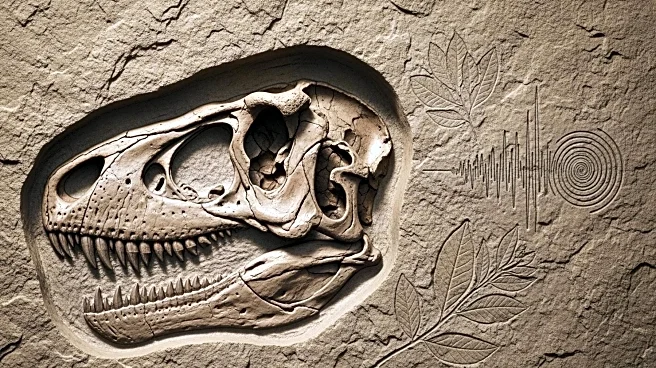
A remarkably well-preserved fossil of the Pulaosaurus qinglong, a small herbivorous dinosaur from approximately 163 million years ago, has been discovered in Qinglong County. This fossil includes a rare
ossified larynx, suggesting the dinosaur may have had vocal abilities similar to modern birds. The fossil also contained seeds and small stones in its stomach, providing direct evidence of its plant-based diet. The discovery was made in a region known for its rich Jurassic period fossils, and the skeleton was found largely intact, allowing scientists to reconstruct its posture and feeding habits. The presence of ossified arytenoids, bones involved in sound production, indicates that Pulaosaurus could have produced complex vocalizations.
Why It's Important?
This discovery is significant as it provides new insights into the vocal capabilities and dietary habits of early dinosaurs, contributing to our understanding of their behavior and ecology. The presence of a bony voice box in Pulaosaurus challenges previous assumptions about dinosaur vocalization, suggesting that some species may have been capable of more complex sounds than previously thought. This could reshape our understanding of dinosaur communication and social interactions. Additionally, the fossil's dietary evidence helps clarify the feeding strategies of early herbivorous dinosaurs, offering a glimpse into the evolutionary adaptations that led to the diverse plant-eating dinosaurs known today.