




What's Happening?
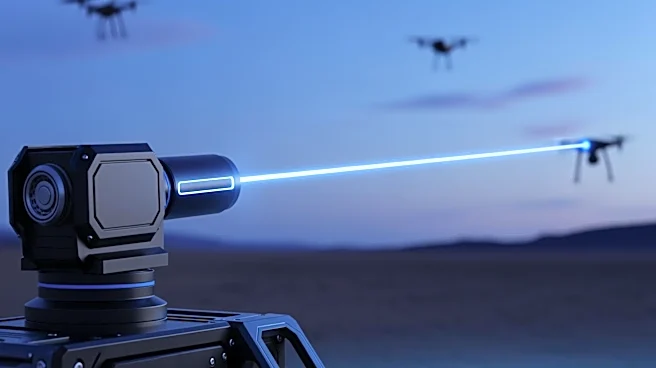
The Pentagon and the Federal Aviation Administration (FAA) have signed an agreement to deploy a high-energy laser counter-drone system along the U.S.-Mexico border. This decision follows FAA testing in New Mexico, which confirmed that the system, used
by the Pentagon and the Department of Homeland Security, does not pose undue risks to passenger aircraft. The deployment aims to address the increasing number of drone incursions, reportedly over 1,000 per month, used by Mexican cartels for drug trafficking and surveillance. The agreement comes after previous incidents where the system mistakenly shot down a government drone, leading to temporary flight restrictions in Texas. The FAA has since conducted a thorough safety risk assessment, ensuring the system's safety for public use.
Why It's Important?
The deployment of the laser system is a significant step in enhancing border security and combating illegal activities facilitated by drones. The use of drones by cartels poses a substantial threat to national security, and this system aims to mitigate that risk. The agreement highlights the government's commitment to leveraging advanced technology to protect the border. However, it also raises concerns about the potential for accidental engagements and the need for stringent safety protocols. The decision underscores the balance between security measures and public safety, particularly in areas with high air traffic.
What's Next?
The implementation of the laser system may lead to further technological advancements in border security. It is likely that the Pentagon and FAA will continue to monitor and evaluate the system's effectiveness and safety. There may also be increased scrutiny and oversight from federal watchdogs, as suggested by Democratic Sen. Tammy Duckworth, to ensure transparency and accountability in the decision-making process. The success of this deployment could pave the way for similar systems in other high-risk areas.