

What's Happening?
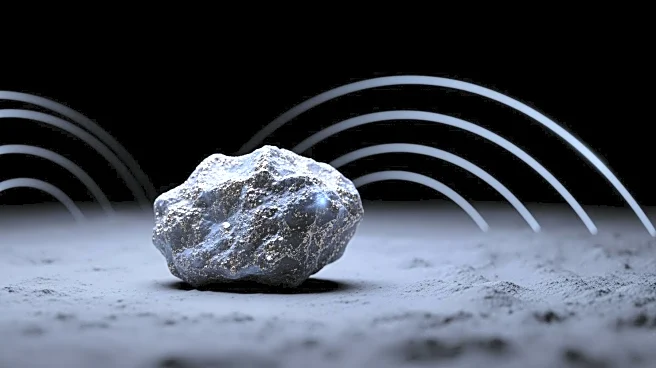
Recent studies of lunar rocks collected during the Apollo missions have provided new insights into the moon's magnetic field. Researchers from the University of Oxford have found that the moon's magnetic field, while generally weak, experienced brief
periods of intense activity 3 to 4 billion years ago. These findings, published in Nature Geoscience, suggest that the moon's magnetic field was at times stronger than Earth's. The study indicates that these spikes in magnetic activity were likely caused by the melting of titanium-rich rocks deep within the moon. Future samples from NASA's Artemis program are expected to provide further understanding of the moon's magnetic history.
Why It's Important?
Understanding the moon's magnetic field is crucial for comprehending its geological history and the conditions that may have influenced its development. The findings challenge previous assumptions about the moon's magnetic activity and suggest that its magnetic field was more dynamic than previously thought. This research has implications for planetary science, particularly in understanding how magnetic fields can protect planets from cosmic radiation. The study also highlights the importance of continued lunar exploration, as future missions could uncover more about the moon's past and its potential for supporting human exploration.
What's Next?
NASA's Artemis program plans to send astronauts to the moon's south pole, where they will collect new samples that could provide additional insights into the moon's magnetic history. These missions aim to explore regions with different geological characteristics than those visited during the Apollo missions. The new data could help scientists refine their understanding of the moon's magnetic field and its evolution. The research could also inform future lunar exploration strategies and the development of technologies to protect astronauts from cosmic radiation.