



What's Happening?
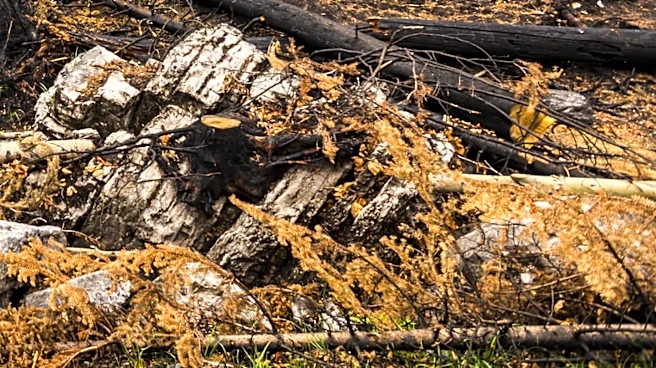
Forest officials in northwest Montana are seeking public input on the Skillet Fire Salvage Project, a clean-up plan following a fire that burned approximately 3,400 acres near Olney in July. The fire, ignited by a lightning strike, affected forestland
previously impacted by winter windstorms. The Flathead National Forest's proposal aims to reduce future fire risks, restore the health of the forest, and support local logging industry jobs. The project involves harvesting over 1,500 acres of damaged and dead trees. Public comments on the plan are being accepted, with an ideal submission deadline of November 25th. The Forest Service intends to make a decision on the proposal in December. This initiative is part of broader efforts in Montana, which recently received grants to develop markets and expand uses for wood fiber, including $500,000 from the U.S. Endowment for Forestry and Communities and nearly $525,000 from the U.S. Department of Agriculture for cooperative development services.
Why It's Important?
This project is important for several reasons, impacting both environmental and economic aspects of Montana. Environmentally, the salvage logging aims to mitigate the risk of future wildfires by removing fuel, which is crucial in a region prone to such events. It also seeks to restore forest health, addressing the damage caused by both the Skillet Fire and previous windstorms. Economically, the project is designed to support local logging industry jobs, providing employment and economic activity in rural areas. The broader context of grants for wood fiber market development underscores a statewide commitment to strengthening the forestry sector. This dual focus on ecological restoration and economic support highlights the interconnectedness of natural resource management and community well-being in Montana. The public comment period ensures that local concerns and perspectives are considered before a final decision is made, reflecting a participatory approach to land management.
What's Next?
The immediate next step involves the public comment period for the Skillet Fire Salvage Project, with an encouraged submission deadline of November 25th. Following this, the Forest Service plans to make a decision on the proposal in December. If approved, the project will proceed with the harvesting of damaged and dead trees across more than 1,500 acres. Concurrently, the grants received by the Montana Cooperative Development Center, totaling over $1 million, will be utilized to develop markets and expand the uses for wood fiber statewide. This includes two years of expanded co-op development services funded by the U.S. Department of Agriculture. These initiatives suggest a continued focus on sustainable forest management and economic development within Montana's forestry sector, with potential for long-term impacts on both the environment and local economies.
Beyond the Headlines
Beyond the immediate goals of fire risk reduction and job creation, the Skillet Fire Salvage Project and related initiatives in Montana touch upon deeper implications for land use and resource management in the U.S. West. The emphasis on restoring forest health post-fire reflects a growing understanding of ecosystem resilience and the need for active management in the face of climate change and increased wildfire frequency. The integration of economic support for the logging industry within environmental recovery plans highlights the complex balance between conservation and resource utilization. This approach acknowledges that sustainable forestry can contribute to both ecological health and local livelihoods. Furthermore, the focus on developing new markets for wood fiber suggests an adaptive strategy for the industry, moving beyond traditional timber sales to explore innovative uses for forest products, which could enhance the long-term viability and environmental benefits of forestry in the region.