



What's Happening?
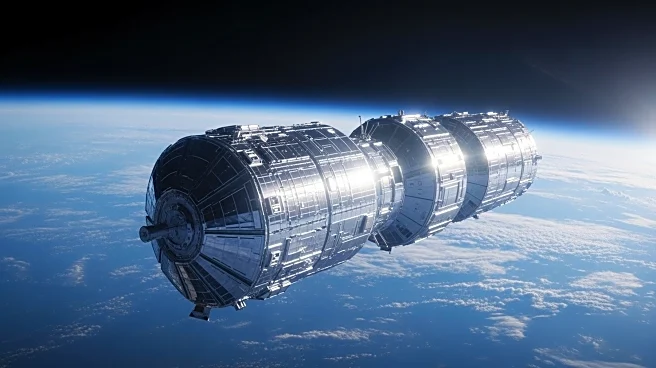
The International Space Station (ISS) recently marked its 25th anniversary of continuous human presence in space. Since its inception, the ISS has been a symbol of international collaboration, with contributions from the United States, Russia, and other
member nations. The station has evolved significantly over the years, expanding from its initial capacity to accommodate three crew members to housing six or seven astronauts for extended periods. The ISS is equipped with various modules, laboratories, and docking ports, and it relies on solar panels for energy. The station has hosted 292 individuals, including astronauts, cosmonauts, and space tourists, and has been a hub for groundbreaking scientific research. Despite its success, the ISS is scheduled for retirement in 2030, with plans for smaller commercial space stations to take its place.
Why It's Important?
The ISS represents the largest and most complex international collaboration in space exploration history. Its continuous operation has facilitated significant scientific advancements, benefiting various fields such as medicine, materials science, and environmental research. The station's collaborative nature has fostered diplomatic relations and technological exchange among participating countries. The planned retirement of the ISS in 2030 marks a pivotal transition in space exploration, as the focus shifts towards commercial space stations. This change could lead to increased private sector involvement in space activities, potentially accelerating innovation and reducing costs. However, the decommissioning of the ISS also poses challenges, including the safe deorbiting of the massive structure and the emotional impact on those who have worked on or visited the station.
What's Next?
As the ISS approaches its retirement, preparations for its deorbiting are underway. This process involves complex logistical planning to ensure the station's safe re-entry into Earth's atmosphere, where it will be directed to a remote area of the Pacific Ocean. Meanwhile, several commercial space stations are in the planning stages, aiming to fill the void left by the ISS. These new stations are expected to offer opportunities for private companies to conduct research and develop technologies in space. The transition to commercial space stations could reshape the landscape of space exploration, with potential implications for international cooperation, regulatory frameworks, and the commercialization of space activities.