



What's Happening?
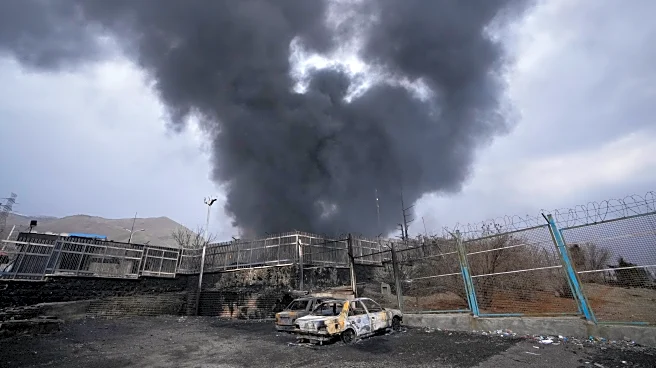
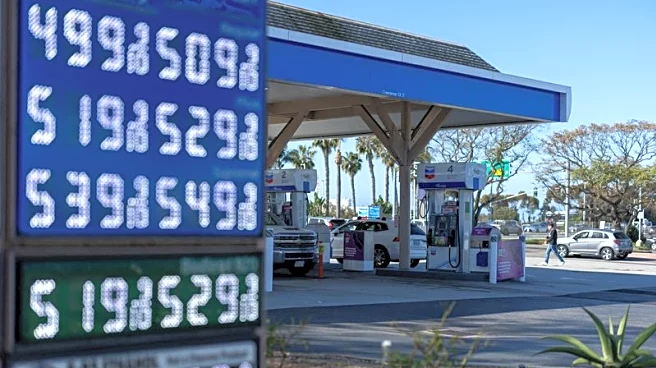
Recent military actions by the U.S. and Israel against Iran have led to significant disruptions in oil shipments, particularly affecting the Strait of Hormuz. This has resulted in a sharp increase in fuel prices across the United States. According to GasBuddy,
the national average price of gasoline has risen by 51.1 cents over the past week, reaching $3.45 per gallon. Diesel prices have also surged, with the national average increasing by 85.9 cents to $4.60 per gallon. The closure of the Strait of Hormuz, a critical passage for global oil transport, has contributed to these price hikes, as oil markets adjust to the risk of prolonged supply disruptions.
Why It's Important?
The surge in fuel prices has significant implications for the U.S. economy and consumers. Higher gasoline and diesel prices increase transportation costs, which can lead to higher prices for goods and services. This situation may exacerbate inflationary pressures, affecting consumer spending and economic growth. Additionally, industries reliant on fuel, such as transportation and logistics, may face increased operational costs, potentially impacting their profitability. The geopolitical tensions in the Middle East could further destabilize global oil markets, leading to continued volatility in fuel prices.
What's Next?
As the situation in the Middle East remains fluid, further military actions or diplomatic developments could influence oil prices and supply chains. Stakeholders, including government agencies and energy companies, may need to consider strategic responses to mitigate the impact of rising fuel costs. Policymakers might explore options such as releasing strategic petroleum reserves or negotiating international agreements to stabilize oil markets. Consumers and businesses will likely continue to monitor fuel prices closely, adjusting their budgets and operations accordingly.
Beyond the Headlines
The current fuel price surge highlights the vulnerability of global energy markets to geopolitical conflicts. It underscores the importance of diversifying energy sources and investing in renewable energy to reduce dependency on volatile oil markets. The situation also raises ethical and environmental concerns regarding the impact of military actions on civilian populations and ecosystems. Long-term shifts towards sustainable energy solutions could be accelerated as stakeholders seek to minimize future risks associated with fossil fuel reliance.