






What's Happening?
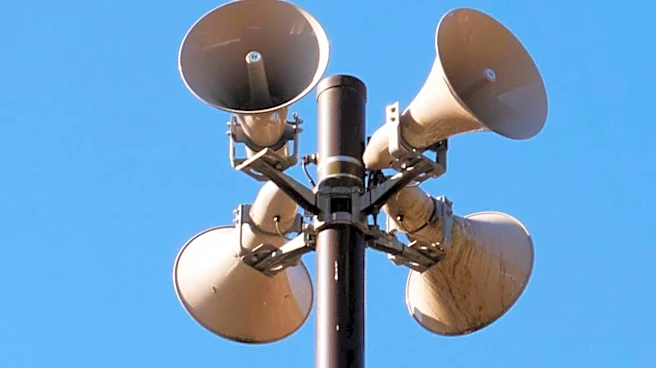
Tornado sirens across multiple communities in DuPage County, Illinois, were accidentally activated around 3 a.m. on Tuesday, waking up many residents. DuPage Public Safety Communications (DuComm) confirmed that a staff member inadvertently triggered the
sirens during a planned system test. The test was intended to check the technology without actually sounding the sirens. The National Weather Service in Chicago confirmed that no severe weather warnings had been issued from their office. Local agencies, including the village of Downers Grove and Villa Park police, quickly posted on social media to inform residents that the activation was an error and there was no weather emergency. DuComm has issued an apology for the unnecessary interruption and confusion caused by the incident.
Why It's Important?
The accidental activation of tornado sirens in DuPage County is important because it highlights potential vulnerabilities in emergency alert systems and can erode public trust in these critical warnings. When sirens sound without an actual threat, it can lead to 'alert fatigue,' causing residents to disregard future warnings, which could have severe consequences during a genuine emergency. This incident also underscores the need for rigorous protocols and fail-safes in systems designed for public safety. For DuPage County, it necessitates a review of their testing procedures and staff training to prevent similar occurrences. The widespread confusion and concern expressed by residents on social media demonstrate the immediate impact of such errors on community well-being and the importance of rapid, clear communication from authorities to mitigate panic and misinformation.
What's Next?
DuComm has issued an apology and stated that an official statement with additional details will be shared. The agency typically tests its sirens on the first Tuesday of the month at 10 a.m., suggesting that this incident was an anomaly during a different type of system check. Moving forward, DuPage County and DuComm will likely review their procedures for system testing and staff activation to prevent future accidental activations. This could involve implementing stricter protocols, enhancing training, or upgrading technology to ensure that tests do not inadvertently trigger live alerts. The incident may also prompt broader discussions among municipalities about the balance between automated warning systems and manual oversight, and how to maintain public confidence in emergency alerts.
Beyond the Headlines
The accidental siren activation in DuPage County touches upon the broader societal reliance on technology for public safety and the inherent risks of human error within complex systems. In an era where automated alerts are increasingly common, this event serves as a reminder that even well-intentioned system checks can have unintended consequences. It raises questions about the psychological impact of false alarms on public behavior during emergencies, potentially leading to complacency or distrust. Furthermore, the incident highlights the critical role of social media in both disseminating information and managing public perception during unexpected events. The rapid response of local agencies to clarify the situation via social media was crucial in preventing widespread panic, underscoring the evolving landscape of emergency communication in the digital age. This event could contribute to best practices for testing and managing public alert systems nationwide.