


What's Happening?
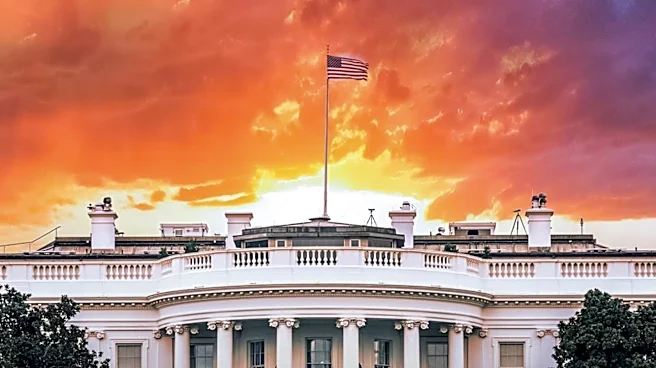
The Trump administration is significantly expanding federal control over U.S. election processes, moving beyond traditional state administration. This initiative involves an executive order directing the Department of Homeland Security (DHS) to compile
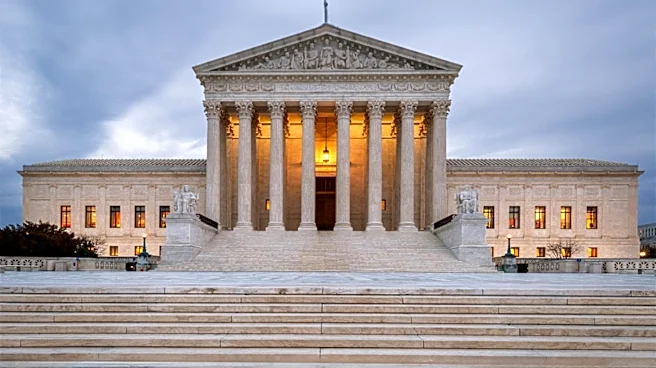
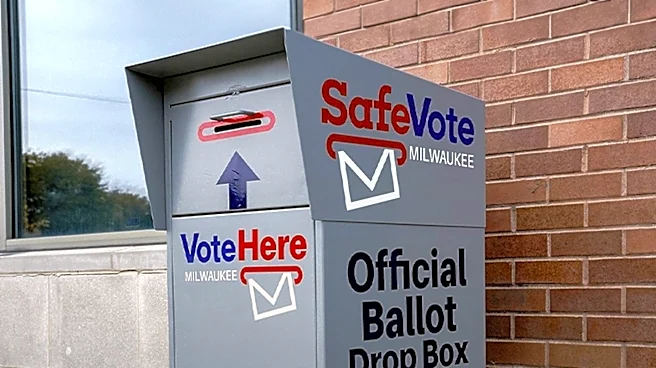
'State Citizenship Lists' by combining immigration, Social Security, and other federal data through the SAVE (Systematic Alien Verification for Entitlements) system. These lists are intended to verify the citizenship of registered voters. Concurrently, the executive order mandates the U.S. Postal Service (USPS) to implement a new system for handling mail ballots, requiring states to provide voter information and use unique barcodes, with the USPS refusing delivery if required information is not submitted. These actions have led to legal challenges, with the Supreme Court currently reviewing emergency requests related to both the expanded SAVE system and the mail ballot regulations.
Why It's Important?
This expansion of federal executive power into election administration represents a fundamental shift in the long-standing balance between federal and state authority over voting. Historically, states have managed voter registration, roll maintenance, and ballot issuance, with federal oversight primarily through Congress and federal law. The Trump administration's approach, utilizing executive orders and federal agencies, bypasses congressional legislation, raising constitutional questions about the separation of powers. Critics argue that the expanded SAVE system, despite its stated goal of preventing non-citizen voting, relies on databases with documented accuracy problems, potentially leading to the disenfranchisement of eligible citizens due to mismatches. The USPS's role in verifying mail ballots further centralizes control, creating a complex federal infrastructure that could impact the accessibility and integrity of elections, particularly the upcoming midterms.
What's Next?
The Supreme Court is actively considering two emergency disputes stemming from these initiatives: one concerning the use of the expanded SAVE system and another regarding the USPS mail ballot rules. A federal judge previously blocked the use of Social Security information in SAVE, an injunction upheld by the D.C. Circuit, but the Solicitor General has asked the Supreme Court to allow its resumption. With the midterm elections approaching, the Court's decisions will have immediate and significant consequences for how votes are cast and counted. The ongoing legal battles will determine the extent to which the executive branch can unilaterally implement such sweeping changes to election administration without explicit congressional approval, setting precedents for future federal involvement in state-run elections.
Beyond the Headlines
The Trump administration's actions delve into deeper implications concerning trust in democratic institutions and the potential for political weaponization of federal resources. By asserting that the federal government should control 'who gets a ballot and whose vote counts,' as Justice Ketanji Brown Jackson noted in her dissent, the administration challenges the foundational principle of decentralized election management. This move could erode public confidence in election outcomes, especially if database inaccuracies lead to legitimate voters being flagged or ballots being rejected. Furthermore, the use of federal agencies like DHS and USPS in such a capacity raises concerns about the politicization of non-partisan government functions. The long-term consequence could be a more contentious and litigious electoral landscape, where the legitimacy of election processes is constantly debated, potentially undermining the stability of the U.S. democratic system.