




What's Happening?
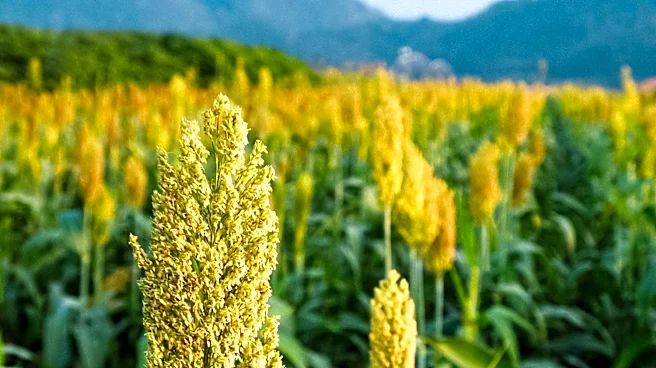
A study investigated the impact of diversified crop rotation on soil nutrients, microbial community structure, and ecological functions in sorghum rhizosphere soil. Researchers compared continuous sorghum cropping (SSS) with three rotation systems: sorghum-potato-sorghum
(SPS), sorghum-common vetch-sorghum (SVS), and sorghum-green pea shoots-sorghum (SGS). The findings indicate that all three rotation treatments significantly improved soil physicochemical properties, such as organic matter and available nutrient content, compared to continuous cropping. Specifically, SPS showed the greatest enhancement in nutrients, while SVS notably increased bacterial richness and diversity. The study also revealed that crop rotation reshaped both bacterial and fungal communities, enriching functional groups involved in carbon and nitrogen cycling and reducing the abundance of soil pathogens. The complexity and connectivity of microbial co-occurrence networks were also enhanced in rotation systems.
Why It's Important?
This research is crucial for sustainable agricultural practices, particularly in regions reliant on sorghum cultivation. Continuous monocropping often leads to soil degradation and reduced yields over time. By demonstrating that diversified crop rotation can significantly improve soil health and microbial diversity, the study offers a viable strategy to mitigate these issues. Enhanced soil nutrients and beneficial microbial communities can lead to more resilient crops, reduced reliance on synthetic fertilizers and pesticides, and ultimately, more sustainable food production systems. The findings provide a scientific basis for optimizing crop rotation systems, which can have long-term economic benefits for farmers through improved yields and reduced input costs, while also contributing to environmental conservation by promoting healthier soil ecosystems.
What's Next?
The study suggests that future research should combine long-term field experiments with multi-omics technologies to further analyze the molecular mechanisms by which crop rotation influences soil microbial functions. This will provide a deeper understanding of the observed changes and help in developing more precise agricultural strategies. Additionally, exploring the development of beneficial functional microorganisms into specialized microbial inoculants is recommended. This could offer targeted solutions for soil health improvement, providing scientific and technological support for sustainable agricultural development. The current findings, based on short-term experiments, lay the groundwork for more extensive investigations into optimizing crop rotation patterns based on crop functional types to maximize ecological advantages.
Beyond the Headlines
The implications of this study extend beyond immediate agricultural benefits, touching upon broader ecological and food security concerns. By promoting soil biodiversity and nutrient cycling, diversified crop rotation contributes to the overall health of ecosystems, which can have positive ripple effects on water quality and carbon sequestration. The reduction of soil pathogens through rotation also lessens the need for chemical interventions, aligning with organic farming principles and consumer demand for healthier food. Furthermore, understanding and implementing these practices can enhance food security by ensuring the long-term productivity of agricultural lands, making food systems more resilient to environmental changes and economic pressures. This research highlights the intricate relationship between agricultural practices, soil biology, and environmental sustainability.