



What's Happening?
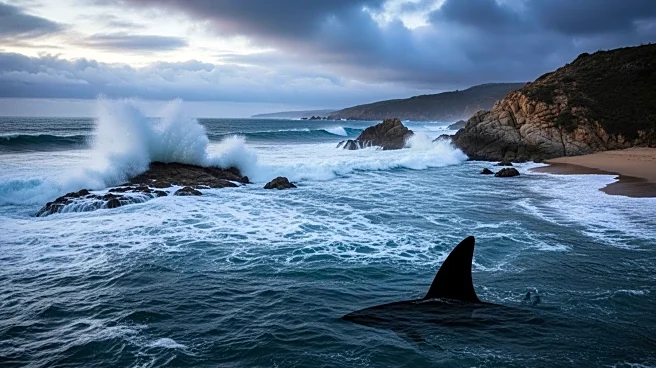
Australia's New South Wales has closed around 40 beaches following four shark attacks in two days, attributed to bull sharks. These incidents occurred after heavy rainfall, which created murky water conditions that attract sharks. The attacks have left
a 12-year-old boy and a 25-year-old surfer in critical condition. Bull sharks, known for inhabiting both fresh and marine waters, are drawn to areas where rain flushes food from estuaries into the ocean. The recent weather conditions have heightened the risk of shark encounters, prompting authorities to issue warnings and close beaches to protect the public.
Why It's Important?
The spate of shark attacks highlights the complex relationship between environmental conditions and marine life behavior. Heavy rainfall and resulting water quality changes can increase the likelihood of shark encounters, posing a significant safety risk to beachgoers. This situation emphasizes the need for effective communication and warning systems to inform the public about potential dangers. Additionally, it underscores the importance of environmental management practices that mitigate the impact of urban runoff on marine ecosystems. As climate patterns continue to change, understanding these dynamics is crucial for developing strategies to protect both human safety and marine biodiversity.