



What's Happening?
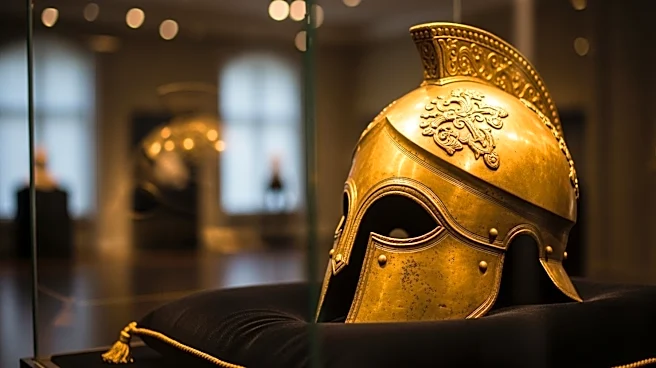
Dutch authorities have successfully recovered a priceless ancient golden helmet that was stolen from a museum in the Netherlands last year. The Cotofenesti helmet, a revered national treasure from Romania's Dacia civilization, was unveiled during a news
conference in Assen, Netherlands. The recovery was part of a deal with three men arrested shortly after the heist. The helmet, although slightly dented, is expected to suffer no permanent damage. Two of three missing armbands were also recovered, while the search for the remaining armband continues. The theft involved a homemade firework bomb and sledgehammer, causing a strain on relations between the Netherlands and Romania.
Why It's Important?
The recovery of the Cotofenesti helmet is significant for both Romania and the Netherlands, as it represents a successful international collaboration in preserving cultural heritage. The theft had been a major diplomatic issue, with Romanian Justice Minister Radu Marinescu labeling it a 'crime against our state.' The incident highlights the vulnerability of cultural artifacts to theft and the importance of international cooperation in their recovery. The successful retrieval of the helmet and armbands may strengthen diplomatic ties and encourage further collaboration in protecting cultural heritage.
What's Next?
The trial of the three men arrested for the heist is set to begin later in April. This legal proceeding will likely address the details of the theft and the methods used to recover the artifacts. The ongoing search for the remaining armband will continue, with authorities possibly employing additional resources to ensure its recovery. The incident may prompt museums to enhance security measures to prevent future thefts, and could lead to discussions on international protocols for protecting cultural heritage.
Beyond the Headlines
The theft and recovery of the Cotofenesti helmet underscore the ethical and legal challenges in protecting cultural artifacts. It raises questions about the adequacy of current security measures in museums and the responsibilities of countries in safeguarding their national treasures. The incident may lead to increased awareness and efforts to combat the illegal trade of cultural artifacts, as well as discussions on the ethical implications of artifact ownership and repatriation.