



What's Happening?
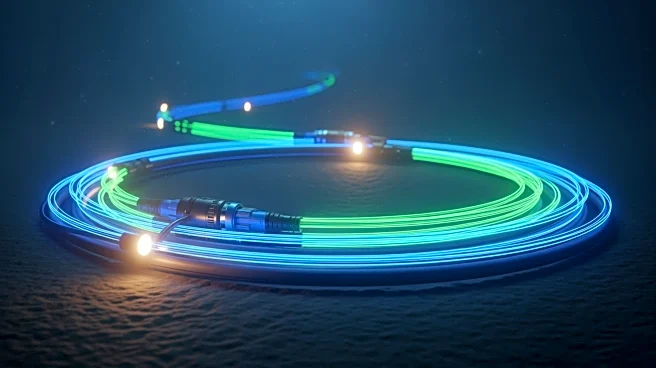
Vodafone has commenced a marine survey for the Thetis Express, a new subsea cable project designed to connect data centers in Heraklion, Crete, and Athens. The cable will feature a maximum capacity of 180 terabits per second (Tbps), enabling the streaming
of 25 million 4K videos simultaneously. The route includes two subsea segments originating from Athens and Crete, meeting at Milos island, and a terrestrial segment across the island. This project is part of Vodafone's strategy to enhance internet traffic flow and connectivity in Greece, utilizing a combination of optical fiber and subsea cables, with future plans for satellite services.
Why It's Important?
The Thetis Express project is significant as it strengthens Greece's position in the global telecommunications network, particularly in the Mediterranean region. By increasing connectivity and capacity, Vodafone aims to provide more robust and reliable internet services, which is crucial for economic growth and digital transformation. The project also offers redundancy, ensuring continued service in case of disruptions. Additionally, it aligns with Vodafone's involvement in the 2Africa cable, enhancing interconnectivity between Europe, Africa, and Asia, and supporting the growing demand for data services in these regions.
What's Next?
Upon completion, the Thetis Express will offer a broader range of wholesale interconnectivity services from Greece to Europe and Southeast Asia. Vodafone plans to integrate the Thetis Express with the 2Africa cable, further expanding its network reach. This integration will likely attract more businesses and service providers to leverage the enhanced connectivity, potentially leading to increased investments in the region's digital infrastructure. Stakeholders, including telecom companies and internet service providers, may respond by exploring new opportunities for collaboration and service expansion.