





What's Happening?
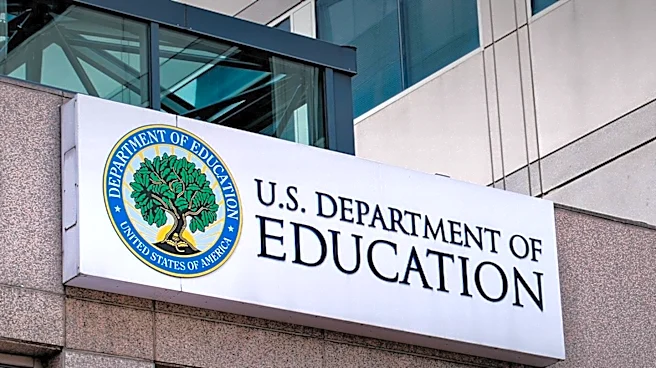
The U.S. Department of Education has launched a federal investigation into Milwaukee Public Schools (MPS) regarding allegations that the district uses race as a factor in student disciplinary actions. This investigation was announced on August 18, following
new guidelines issued by the Department’s Office of Civil Rights (OCR). These guidelines, which comply with an April executive order, state that schools violate the Civil Rights Act of 1964 if they evaluate the racial outcomes of their discipline policies and make decisions based on those outcomes. The new guidance marks a reversal of the OCR's previous stance, which had considered disparate impacts of disciplinary policies as grounds for investigating racial discrimination. MPS officials confirmed receiving notice of the investigation but stated they had no further information about its prompt. The Department's press release indicated the investigation was launched because Milwaukee education leaders had 'derided facially neutral school policies as reflecting systemic 'whiteness'' and were 'seemingly encouraging school officials to consider race in disciplinary practices.'
Why It's Important?
This investigation is significant as it signals a major shift in federal policy regarding racial disparities in school discipline. The new guidelines from the Office of Civil Rights explicitly prohibit schools from considering race when evaluating disciplinary outcomes, a direct reversal of previous interpretations that focused on disparate impact. This change could have profound implications for how school districts nationwide address issues of equity and discipline. For MPS, a district that has historically faced scrutiny over its disciplinary practices, including a previous OCR probe a decade ago concerning the disproportionate suspension and expulsion of Black students, this investigation could lead to significant changes in its policies and practices. If MPS is found to be in violation of civil rights law, it could face a resolution agreement or, in extreme cases, lose federal funding. The investigation also highlights the ongoing national debate about race, equity, and disciplinary approaches in education, with potential ripple effects on how schools balance maintaining order with ensuring fair treatment for all students.
What's Next?
The federal investigation into Milwaukee Public Schools will involve a comprehensive review, which may include examining records, conducting interviews with school staff and administrators, and making site visits. If the Office of Civil Rights finds that MPS has violated civil rights law, it will seek to negotiate a resolution agreement. This agreement would outline specific steps MPS must take to address the identified violations and ensure compliance with federal law. Should MPS refuse to comply with such an agreement, the district could potentially face the loss of federal funding, a significant financial consequence. The investigation's outcome could also set a precedent for other school districts across the country, influencing how they interpret and implement disciplinary policies in light of the Department of Education's new guidelines. The broader implications for how schools address racial disparities in discipline will continue to be a subject of national discussion and potential policy adjustments.
Beyond the Headlines
The investigation into Milwaukee Public Schools delves into the complex and often contentious intersection of race, discipline, and educational policy. The Department of Education's new stance, which discourages schools from evaluating racial outcomes in discipline, represents a significant ideological shift. This approach moves away from addressing systemic disparities, which were previously a focus, towards a more 'race-neutral' application of rules, regardless of their impact. This could lead to a re-examination of how 'fairness' is defined in school discipline and whether policies should be judged solely on their intent or also on their actual outcomes for different racial groups. The controversy surrounding MPS's memo on 'whiteness' and disciplinary practices underscores the cultural and political sensitivities involved. This situation highlights a broader national tension between efforts to achieve racial equity and concerns about reverse discrimination or the imposition of specific ideological viewpoints in education. The long-term impact could be a redefinition of civil rights enforcement in education, potentially leading to less emphasis on statistical disparities and more on the uniform application of rules.