
What's Happening?
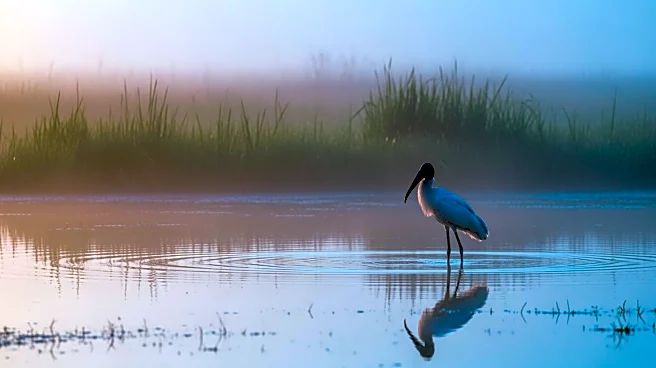
The wood stork, a bird species once on the brink of extinction, has been officially removed from the federal list of endangered and threatened wildlife. This decision comes after decades of conservation efforts that have successfully increased the wood stork population
in the southeastern United States. Initially listed as endangered in 1984 due to significant habitat loss and altered water flows, the wood stork population had dwindled to an estimated 4,000 to 5,000 nesting pairs by the late 1970s. Through concerted efforts in habitat restoration and wetland management, the population has rebounded to approximately 10,000 to 14,000 nesting pairs. Despite this success, conservation groups warn that climate change poses ongoing threats to the species' habitat stability and reproductive success.
Why It's Important?
The removal of the wood stork from the endangered list marks a significant victory for conservationists and highlights the effectiveness of targeted environmental restoration efforts. This success story underscores the importance of habitat management and the role of private landowners in conservation. However, the ongoing threat of climate change, including sea-level rise and altered precipitation patterns, continues to challenge the long-term resilience of the wood stork population. The situation serves as a reminder of the delicate balance required to maintain biodiversity and the need for continued vigilance in conservation practices.
What's Next?
While the wood stork's removal from the endangered list is a positive development, conservationists emphasize the need for ongoing monitoring and adaptive management strategies to address climate-related challenges. Efforts will likely focus on maintaining and enhancing wetland habitats, particularly in areas vulnerable to climate change impacts. Collaboration between government agencies, private landowners, and conservation organizations will be crucial in ensuring the wood stork's continued recovery and adaptation to changing environmental conditions.