



What's Happening?
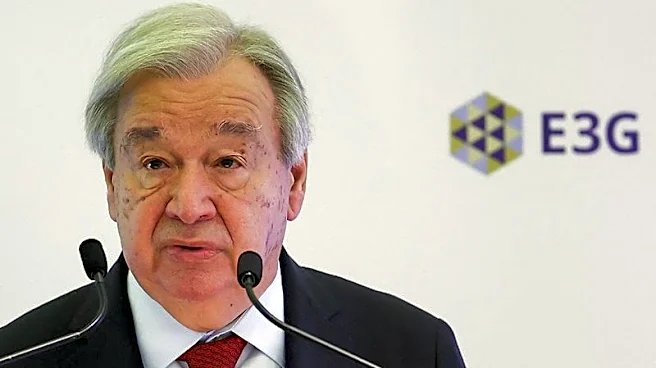
Stéphane Dujarric, Spokesman for the United Nations Secretary-General, clarified recent reports regarding Secretary-General Antonio Guterres' comments on UN special rapporteurs. Dujarric stated that Guterres did not claim the rapporteurs were 'out of
control' but rather emphasized their independence from the UN Secretariat. This clarification came in response to reports from The Jerusalem Post and the Financial Times, which suggested Guterres admitted some rapporteurs were 'totally out of control' concerning their views on Israel. Dujarric explained that Guterres was referring to the structural independence of these rapporteurs within the broader UN system, not the content of their work. He reiterated that the Secretary-General's office defends the rapporteurs' right to speak and work independently, asserting that their strength lies in this independence. Guterres also strongly denied any institutional bias of the UN against Israel, stating that the organization has been on the 'right side of history' in defending peace in the Middle East.
Why It's Important?
This clarification is important as it addresses concerns about the perceived impartiality of UN special rapporteurs and the UN's stance on sensitive international issues, particularly regarding Israel. The independence of special rapporteurs is a cornerstone of their ability to investigate and report on human rights situations without political interference. Misinterpretations of the Secretary-General's statements could undermine public trust in the UN's objectivity and its mechanisms for addressing global conflicts. The UN's denial of bias against Israel, coupled with the emphasis on the need for reconciliation between the two peoples, highlights the delicate balance the organization attempts to maintain in complex geopolitical landscapes. The incident underscores the critical role of accurate communication in international diplomacy and the potential for misconstrued remarks to escalate tensions or erode confidence in multilateral institutions.
What's Next?
The UN will likely continue to emphasize the independence of its special rapporteurs while also working to ensure clarity in its official communications to prevent future misinterpretations. The ongoing diplomatic efforts in the Middle East, which the UN Secretary-General has stated are aimed at promoting peace and reconciliation, will remain a key focus. Member states and the public will continue to scrutinize the reports of special rapporteurs and the UN's overall approach to international conflicts. The incident may prompt further internal discussions within the UN regarding how to best communicate the nuances of its organizational structure and the roles of its various independent bodies to a global audience.
Beyond the Headlines
Beyond the immediate clarification, this event touches upon the broader challenge of maintaining perceived neutrality and effectiveness for international organizations like the UN in a highly polarized world. The concept of 'independence' for special rapporteurs, while crucial for their mandate, can also lead to situations where their findings or statements are perceived as controversial or biased by certain member states. This tension between independence and accountability is a constant balancing act for the UN. The incident also reflects the ongoing scrutiny faced by the UN regarding its actions and statements concerning the Israeli-Palestinian conflict, a deeply contentious issue that often draws strong reactions from various international actors. The need for reconciliation, as articulated by Guterres, points to the long-term diplomatic goals that often face significant obstacles due to historical grievances and ongoing conflicts.