


What's Happening?
Israel is currently engaged in efforts to recover the remains of Ran Gvili, the last remaining Israeli hostage whose body has not been returned since the war in Gaza began. The reopening of the Rafah crossing, Gaza's only gateway not directly controlled
by Israel, is contingent on the return of Gvili's remains. Israeli officials have stated that the crossing will remain closed until this condition is met. The Cabinet is expected to discuss both the recovery effort and the future of the Rafah crossing in the coming week. Meanwhile, a senior Palestinian official has indicated that the crossing is expected to reopen soon, prompting pushback from Israel.
Why It's Important?
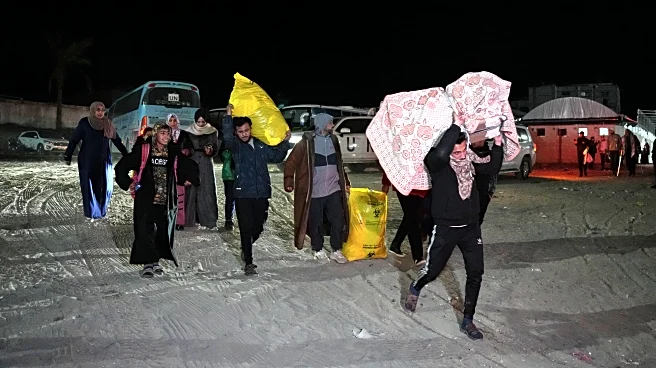
The situation underscores the complex geopolitical dynamics in the region, particularly the sensitive nature of hostage negotiations and border control. The Rafah crossing is crucial for the movement of people, aid, and reconstruction materials, making its status a significant point of contention. The resolution of this issue could impact regional stability and humanitarian efforts in Gaza. The outcome of these negotiations could set a precedent for future diplomatic engagements and influence the broader peace process in the region.
What's Next?
The Israeli Cabinet is set to discuss the recovery of Gvili's remains and the Rafah crossing's status. The outcome of these discussions could lead to changes in the current stalemate. Potential reactions from Palestinian authorities and international stakeholders, including the U.S., could further influence the situation. The reopening of the crossing could facilitate humanitarian aid and reconstruction efforts in Gaza, but only if the conditions set by Israel are met.