



What's Happening?
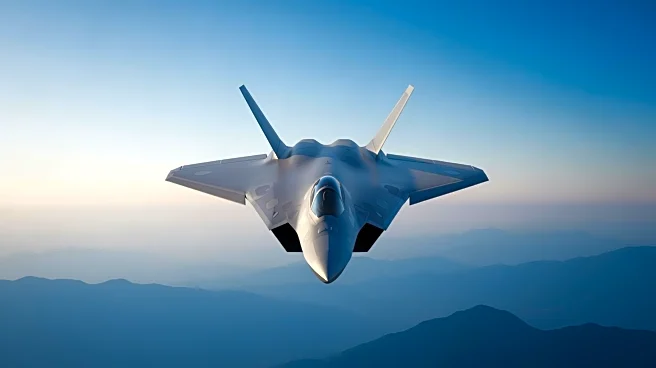
President Erdoğan has expressed Turkey's desire to rejoin the U.S.-led F-35 fighter jet program, emphasizing the importance of receiving the aircraft for which Turkey has already paid. This move is seen as crucial for NATO's defense capabilities. However,
Israeli officials have raised concerns that Turkey's acquisition of the F-35 could undermine Israel's qualitative military edge in the region. The F-35 program, a significant component of U.S. defense strategy, involves multiple international partners and has been a point of contention between the U.S. and Turkey, especially after Turkey's purchase of the Russian S-400 missile defense system, which led to its suspension from the program.
Why It's Important?
The potential reintegration of Turkey into the F-35 program holds significant implications for regional security dynamics and NATO's strategic posture. For the U.S., balancing relations with Turkey, a key NATO ally, while addressing security concerns related to the S-400 system, remains a complex challenge. Israel's apprehension highlights the delicate balance of power in the Middle East, where military capabilities are closely monitored. The decision could influence U.S.-Turkey relations, impact NATO's operational capabilities, and affect regional military balances, particularly concerning Israel's security interests.
What's Next?
If Turkey is readmitted to the F-35 program, it may lead to diplomatic negotiations addressing the S-400 issue and broader U.S.-Turkey defense cooperation. The U.S. and NATO allies will likely engage in discussions to ensure that Turkey's participation does not compromise allied security. Israel may seek assurances from the U.S. regarding its military edge. The outcome could set a precedent for how NATO handles member states' defense procurements from non-allied countries, potentially influencing future alliance policies.