






What's Happening?
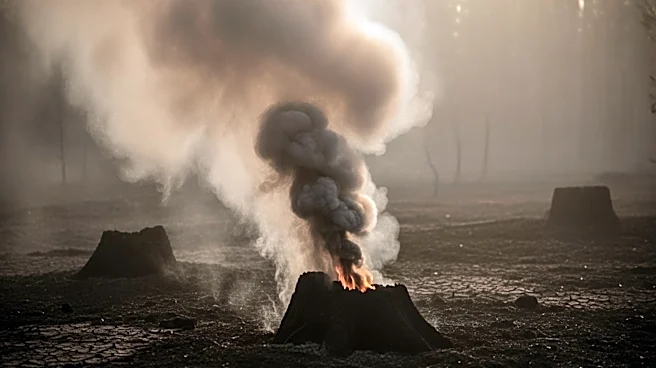
New research utilizing satellite data has identified ground-level ozone as a significant, yet often overlooked, pollutant from wildfires, contributing to thousands of excess deaths annually in the United States. The study highlights that states such as Texas,
Louisiana, Arkansas, Mississippi, and Florida are particularly vulnerable to ozone accumulation from wildfires. The research estimates that wildfire-derived ozone is responsible for approximately 2,045 excess deaths each year, accounting for nearly 16% of all deaths attributed to wildfire smoke. This finding challenges the progress made under the Clean Air Act, as overall ozone-related deaths had been declining. The study underscores the increasing health risks posed by wildfires, exacerbated by climate change and human activities.
Why It's Important?
The discovery of the health impacts of wildfire-derived ozone is crucial as it adds a new dimension to understanding the public health risks associated with wildfires. This pollutant's invisible nature makes it a silent threat, complicating efforts to mitigate its effects. The study's findings could influence public health policies and emergency response strategies, emphasizing the need for comprehensive air quality monitoring and regulation. The potential reduction in federal funding for climate monitoring programs could hinder future research and policy development, making it imperative to address these funding challenges to protect public health effectively.
What's Next?
The study calls for continued research into the health impacts of wildfire pollutants, including heavy metals and aromatic hydrocarbons. However, proposed federal budget cuts to NASA and NOAA could impede the collection of critical data needed for such research. Policymakers and environmental agencies may need to advocate for sustained or increased funding to ensure ongoing monitoring and analysis. Additionally, there may be a push for enhanced regulations and public health advisories to mitigate the risks associated with wildfire smoke, particularly in high-risk states.