





What's Happening?
Lu Jianwang, a 64-year-old resident of New York, has been found guilty of acting as an unregistered agent of the Chinese government. He was accused of establishing a 'secret police station' in Manhattan's Chinatown on behalf of Beijing. Federal prosecutors
in Brooklyn stated that Lu should have informed the U.S. attorney general about his role as a Chinese agent when he helped open the police station in 2022. Additionally, he was accused of assisting the Chinese government in locating a pro-democracy activist residing in California. Lu was arrested in April 2023 and faced charges including conspiracy to act as an unregistered foreign agent, acting as an unregistered agent of China, and obstruction of justice. The jury in Brooklyn federal court delivered the verdict after a weeklong trial, and Lu now faces up to 30 years in prison.
Why It's Important?
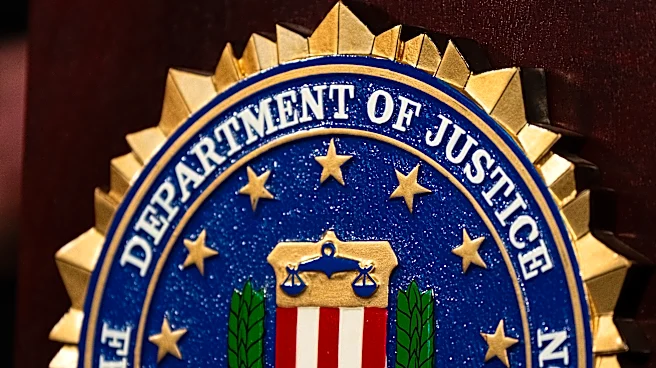
This case highlights the ongoing concerns about foreign influence and espionage activities within the United States. The conviction of Lu Jianwang underscores the U.S. government's efforts to combat what it describes as 'transnational repression' by adversarial nations like China. Such activities are seen as attempts to intimidate political opponents and exert influence on foreign soil. The verdict serves as a warning to other potential foreign agents operating in the U.S. and reinforces the FBI's commitment to uncovering and disrupting clandestine operations by foreign governments. The case also reflects broader geopolitical tensions between the U.S. and China, with Beijing dismissing the charges as fabricated and part of a smear campaign.
What's Next?
Following the verdict, Lu Jianwang awaits sentencing, which could result in a prison term of up to 30 years. The U.S. Department of Justice is likely to continue its investigations into similar cases of foreign influence and unregistered agents operating within the country. This case may prompt increased scrutiny and regulatory measures to prevent foreign governments from establishing unauthorized operations in the U.S. Additionally, the outcome could influence diplomatic relations between the U.S. and China, potentially leading to further diplomatic discussions or actions.