



What's Happening?
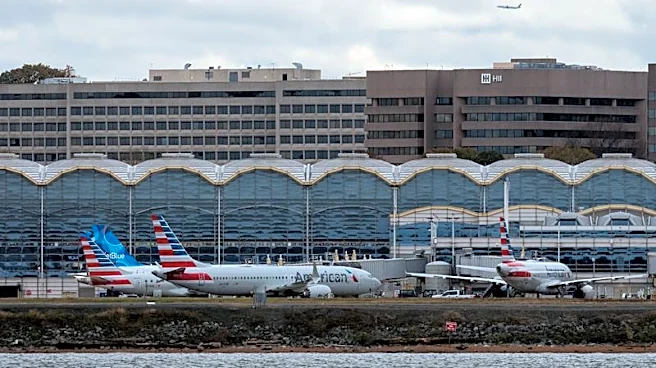
The Trump administration has indicated that the recent nationwide grounding of the U.S. air traffic control system may not be an isolated incident, as the Federal Aviation Administration (FAA) continues its efforts to upgrade and modernize the system.
In contrast, Canadian experts and advocates highlight the robustness and modernization of Canada's air traffic control system. They emphasize the critical role of new technology, coupled with sustained investment in staff and training, as essential components for a reliable and efficient air traffic management infrastructure. This comparison draws attention to the differing approaches and states of modernization between the two North American nations' air control systems.
Why It's Important?
The disparity between the Canadian and U.S. air traffic control systems has significant implications for cross-border travel, trade, and economic stability. A robust and modernized air traffic control system, like Canada's, ensures efficient and safe air travel, which is vital for business, tourism, and logistics. The U.S. system's modernization challenges, as acknowledged by the Trump administration, could lead to continued disruptions, impacting U.S. airlines, travelers, and businesses that rely on timely air cargo. These disruptions can result in substantial economic losses, affect supply chains, and diminish public confidence in air travel. For Canada, its advanced system could offer a competitive advantage in air logistics and potentially serve as a model for other nations, including the U.S., seeking to enhance their air traffic management capabilities. The situation underscores the critical need for continuous investment in infrastructure and technology to maintain national and international connectivity.
What's Next?
The U.S. FAA is expected to continue its efforts to upgrade and modernize its air traffic control system, likely facing ongoing challenges and potential disruptions until significant improvements are realized. This will necessitate substantial investment in new technology, infrastructure, and personnel training. For Canada, the focus will likely remain on maintaining its current robust system and potentially exploring further advancements to stay ahead of evolving air travel demands. The contrast between the two systems may also prompt increased collaboration or knowledge sharing between Canadian and U.S. aviation authorities to address common challenges and enhance regional air safety and efficiency. The long-term goal for both nations will be to ensure their air traffic control systems can effectively manage increasing air traffic volumes and integrate new aviation technologies safely and efficiently.
Beyond the Headlines
The differing states of the Canadian and U.S. air traffic control systems highlight broader issues of public infrastructure investment and technological adoption. Canada's proactive approach to modernization and investment in its system demonstrates the long-term benefits of strategic planning and continuous upgrades. Conversely, the U.S. challenges underscore the potential consequences of delayed or insufficient investment in critical national infrastructure. This situation also touches upon the ethical responsibility of governments to ensure public safety and maintain essential services. The reliance on advanced technology in air traffic control raises questions about cybersecurity and resilience against potential threats, which are increasingly important considerations for national security. Ultimately, the efficiency and reliability of air traffic control systems are not just operational matters but fundamental components of a nation's economic competitiveness and societal well-being.