




What's Happening?
U.S. President Donald Trump has indicated a willingness to consider lifting sanctions on Chinese companies that purchase Iranian oil, contingent on Iran's commitment to suspend its nuclear enrichment program for 20 years. This development follows Trump's
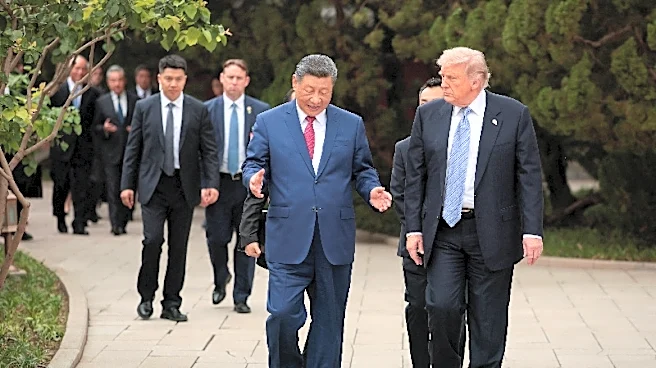
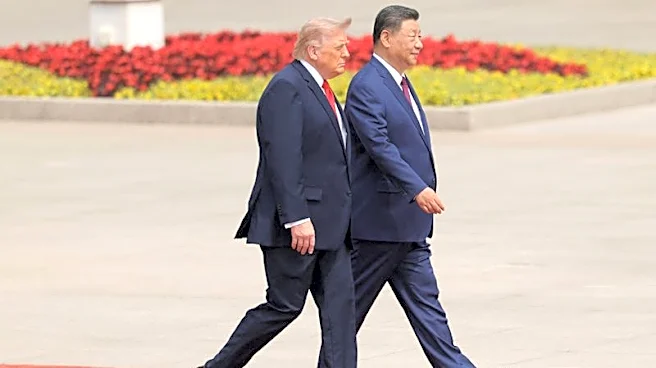
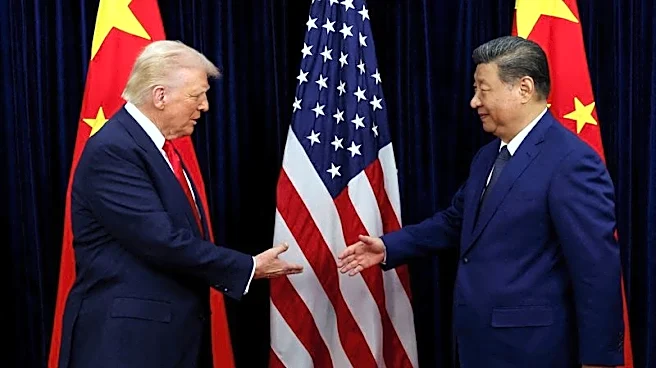
recent visit to China, where he praised Chinese President Xi Jinping and discussed the ongoing tensions with Iran. Despite Tehran's continued blockade of the Strait of Hormuz, Trump has not signaled an intention to renew military action against Iran. The U.S. has rejected Iran's conditions for negotiations, leading to a stalemate. Iranian Foreign Minister Abbas Araghchi highlighted the contradictory messages from the U.S. as a major obstacle in negotiations, while also expressing Iran's readiness for both diplomatic and military responses.
Why It's Important?
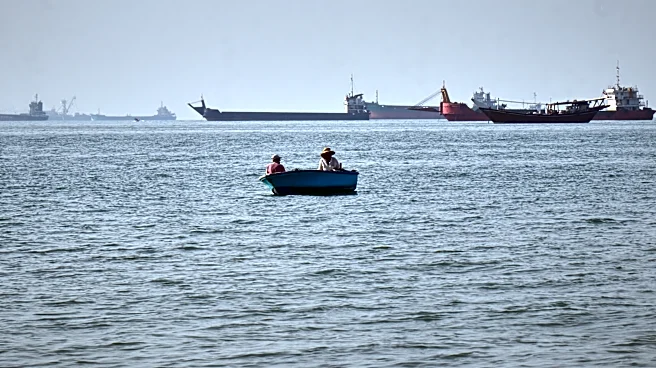
The potential lifting of sanctions on Chinese companies could have significant implications for global oil markets and U.S.-China relations. China's role as a major purchaser of Iranian oil positions it as a key player in the resolution of tensions in the Strait of Hormuz, a critical passage for global oil supply. The U.S. stance on Iran's nuclear capabilities remains firm, with Trump emphasizing the need to prevent Iran from acquiring nuclear weapons. The outcome of these negotiations could impact regional stability in the Middle East and influence global energy prices. Additionally, the U.S.'s approach to Iran may affect its diplomatic relations with other countries involved in the region.
What's Next?
The next steps involve monitoring whether President Trump will proceed with lifting sanctions on Chinese companies and how this decision will influence Iran's actions. The international community will be watching for any shifts in China's position following Trump's visit. The potential for renewed military action remains a concern, as indicated by Trump's comments on social media. The situation in the Strait of Hormuz will continue to be a focal point, with implications for global oil supply and regional security. Stakeholders, including political leaders and businesses, will need to navigate the uncertainties surrounding these developments.