






What's Happening?
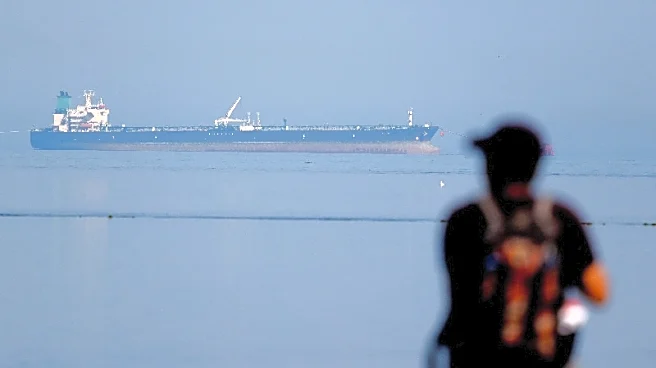
The United Kingdom has quietly issued new licenses allowing the import of diesel and jet fuel made from Russian oil, provided these products are processed in a third country. Additionally, a separate license permits the maritime transport of Russian liquefied
natural gas (LNG). These waivers come amid a global energy crisis exacerbated by the closure of the Strait of Hormuz and rising fuel costs due to the U.S.-Israeli conflict with Iran. The UK government states that these measures aim to stabilize fuel prices while maintaining pressure on Russia over its actions in Ukraine. The licenses are part of broader efforts to manage energy supply disruptions while adhering to international sanctions.
Why It's Important?
The UK's decision to issue these waivers reflects the complex balance between enforcing sanctions and ensuring energy security. As fuel prices soar, such measures are crucial to prevent further economic strain on consumers and industries reliant on stable energy supplies. However, these actions may undermine the UK's position as a leader in the coalition against Russia's aggression in Ukraine, potentially affecting its diplomatic standing. The waivers also highlight the challenges faced by Western nations in maintaining a united front on sanctions while addressing domestic economic pressures.
What's Next?
The UK may face criticism from allies and domestic stakeholders for these waivers, potentially leading to political debates over the country's foreign policy and energy strategy. The situation could prompt further discussions within the G7 and other international forums on balancing sanctions with economic stability. The effectiveness of these waivers in stabilizing fuel prices will be closely monitored, and adjustments may be made based on market responses and geopolitical developments.