



What's Happening?
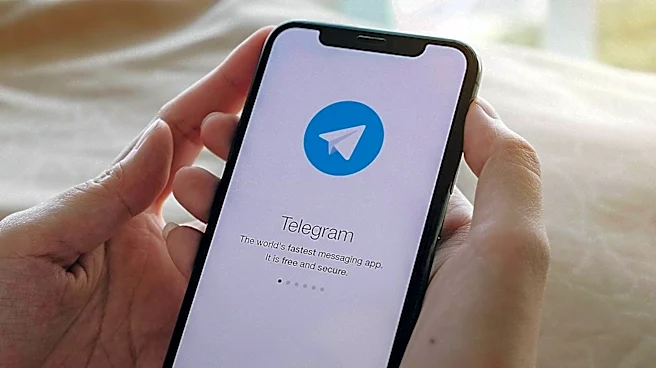
Iraq's Communications and Media Commission (CMC) has announced a decision to block the messaging application Telegram within the country. This action stems from Telegram's alleged failure to adhere to Iraqi legal and regulatory requirements. According
to the CMC, the platform operator did not take necessary measures to address inappropriate content published on its service and failed to comply with Iraqi laws. The commission stated that a 30-day grace period has been provided for Telegram to rectify its legal status. This regulatory move is part of the CMC's broader responsibility to control the use of social media platforms that may spread extremist rhetoric, incite sedition, violence, and hatred, facilitate cybercrimes, and threaten national security. The decision highlights ongoing concerns from Iraqi authorities regarding content moderation and adherence to national regulations by international tech companies operating within its borders.
Why It's Important?
This decision by the Iraqi CMC underscores a growing global trend where national governments are asserting more control over digital platforms and their content. For Iraq, the move is framed as essential for national security and public order, aiming to curb the spread of harmful content such as extremist propaganda and incitement to violence. The blocking of a widely used communication app like Telegram can significantly impact how Iraqi citizens access information and communicate, potentially limiting free expression while also addressing legitimate concerns about online safety and national stability. It also sets a precedent for how other social media companies might be treated if they do not comply with local regulations, potentially leading to similar restrictions on other platforms. The situation reflects a tension between global digital services and national sovereignty over information flow and content standards.
What's Next?
Telegram has been granted a 30-day grace period to address the issues raised by the Iraqi Communications and Media Commission and rectify its legal status. During this period, Telegram will likely engage in discussions with Iraqi authorities to understand and meet the specified legal and regulatory requirements. Failure to comply within this timeframe could result in a permanent block of the service in Iraq. The outcome will depend on Telegram's willingness and ability to implement the necessary changes, which may include stricter content moderation policies or establishing a local legal presence that adheres to Iraqi laws. This situation could also prompt other social media platforms operating in Iraq to review their compliance with local regulations to avoid similar actions.
Beyond the Headlines
The blocking of Telegram in Iraq highlights the complex interplay between digital freedom, national security, and regulatory sovereignty in the digital age. While governments often cite national security and public order as reasons for such actions, these measures can also raise concerns about censorship and the restriction of digital rights. The incident reflects a broader global challenge for tech companies, which must navigate diverse legal frameworks and cultural norms across different countries. It also brings to the forefront the debate over who controls online content and the extent to which platforms should be held responsible for user-generated material. The long-term implications could include a more fragmented global internet, where access to certain platforms varies significantly by country, and increased pressure on tech companies to localize their operations and content policies.