
What's Happening?
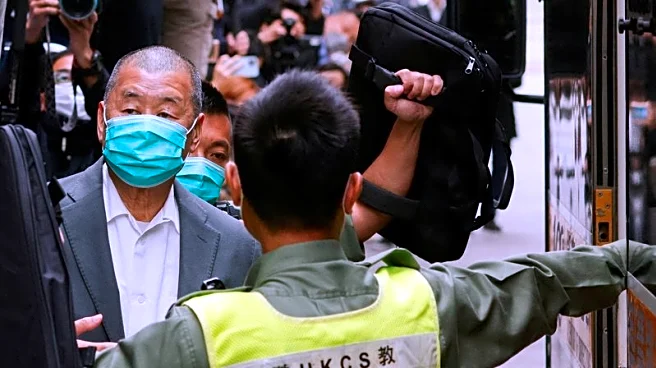
A Hong Kong court is moving closer to sentencing Jimmy Lai, a prominent democracy advocate and former publisher of the now-defunct pro-democracy newspaper Apple Daily. Lai, who was convicted under a national
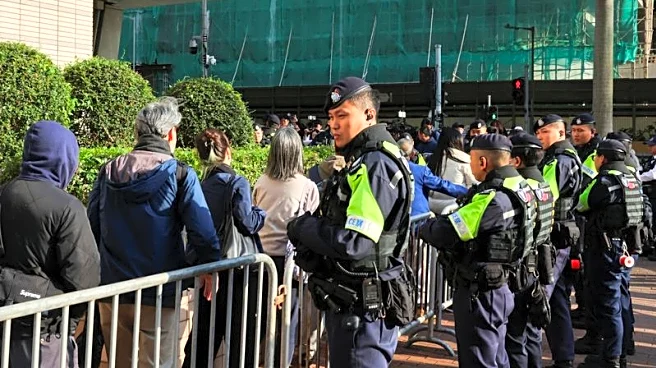
security law, faces a potential life sentence. The court recently heard pleas for lighter sentences from Lai's co-defendants, former executives of Apple Daily, who pleaded guilty to conspiracy to collude with foreign forces. The case is seen as a significant indicator of the state of media freedom in Hong Kong, a city once known for its vibrant press. The national security law, imposed by Beijing in 2020, has been criticized for curtailing civil liberties and press freedom. Lai's conviction has drawn international criticism, although the Hong Kong government maintains that the case is unrelated to media freedom, arguing that the defendants used journalism as a cover for activities harmful to China and Hong Kong.
Why It's Important?
The case against Jimmy Lai and his co-defendants is emblematic of the broader erosion of press freedom in Hong Kong, which has seen a dramatic decline in its global press freedom ranking. The outcome of this case could further impact the city's media landscape, potentially discouraging critical reporting and increasing self-censorship among journalists. The international community is closely watching the proceedings, as they reflect on the broader implications for civil liberties in Hong Kong. The national security law has already led to the closure of several media outlets and the arrest of numerous activists, raising concerns about the future of free expression in the region. The sentencing of Lai and his colleagues could set a precedent for how dissent and press freedom are treated under the current legal framework.
What's Next?
The court has not yet set a date for sentencing, but the decision will be closely monitored by international observers and human rights organizations. The outcome could influence future legal actions against media figures and activists in Hong Kong. If Lai receives a harsh sentence, it may deter other journalists and media outlets from engaging in critical reporting, further stifling press freedom. Conversely, a lighter sentence could signal a potential easing of the government's stance on media-related cases. The international response to the sentencing will also be significant, as foreign governments and organizations may increase pressure on Hong Kong and Beijing to uphold human rights and press freedom.
Beyond the Headlines
The case highlights the complex interplay between national security and press freedom in Hong Kong. The national security law has been used to justify actions against media outlets and activists, raising ethical and legal questions about the balance between security and civil liberties. The closure of Apple Daily and the prosecution of its executives have had a chilling effect on the media industry, with many journalists now practicing self-censorship to avoid legal repercussions. This development could lead to a long-term shift in the media landscape, where critical voices are silenced, and public discourse is limited. The international community's response to these events will be crucial in shaping the future of press freedom in Hong Kong.