







What's Happening?
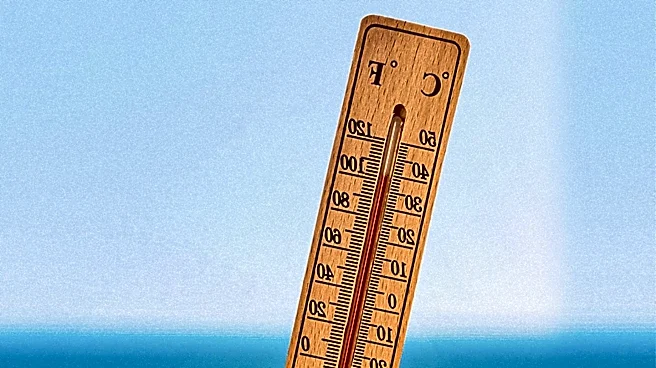
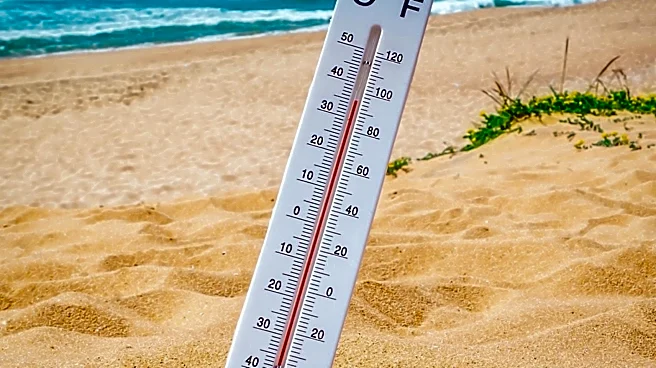
A study by Travis Roach, an economics professor at the University of Central Oklahoma, has found a correlation between rising temperatures and increased Medicaid costs. The analysis, which used over a million federal Medicaid records from 2019 to 2024,
suggests that for every additional day with temperatures above 80 degrees, Medicaid spending increases by a quarter of a percent. This could result in an additional $2.1 billion to $2.7 billion in annual national Medicaid spending by 2050. The study highlights the financial impact of global warming on public healthcare systems, particularly in economically disadvantaged communities.
Why It's Important?
The findings of this study underscore the broader economic implications of climate change, particularly on public health systems like Medicaid. As temperatures rise, the increased healthcare costs could strain state and federal budgets, necessitating policy adjustments to accommodate these changes. The study also highlights the disproportionate impact on vulnerable populations, including low-income individuals and those with chronic illnesses, who are more likely to rely on Medicaid. This could prompt policymakers to prioritize climate adaptation strategies and healthcare interventions to mitigate these effects.
What's Next?
As climate change continues to drive temperature increases, state and federal governments may need to consider integrating climate projections into their budget planning for healthcare programs like Medicaid. This could involve investing in infrastructure to reduce heat exposure, such as cooling centers and improved housing insulation. Additionally, public health campaigns may be necessary to educate communities about the risks of heat-related illnesses and the importance of preventive measures. The study's findings could also influence future research on the economic impacts of climate change on other public services.