






What's Happening?
Alaskan voters have once again rejected a ballot measure aimed at repealing the state's nonpartisan primary system and ranked choice voting (RCV). This marks the second time Alaskans have voted against such a repeal, with a previous attempt in 2024 also
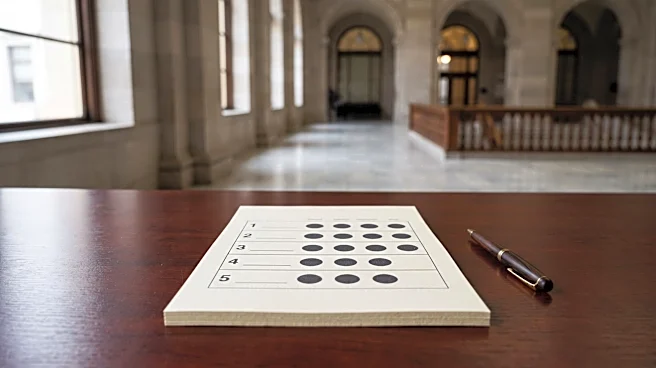
failing narrowly. The state's unique election system, initially approved by voters in 2020, allows for a top-four nonpartisan primary where candidates of all affiliations appear on the same ballot. If no candidate secures a majority in the general election, ranked choice voting is then used to determine the winner. The recent U.S. Senate general election, which featured two candidates with the same name, brought the system under intense national scrutiny, and that race is expected to proceed to a ranked-choice tabulation.
Why It's Important?
The repeated affirmation of ranked choice voting and top-four primaries in Alaska holds significant implications for electoral reform movements across the U.S. It demonstrates a sustained voter preference for systems that aim to reduce partisan polarization and increase voter choice. Proponents argue that this system empowers voters to select candidates regardless of party affiliation and can lead to more representative outcomes by ensuring the winning candidate has broader support. The system's ability to potentially mitigate confusion, as seen in the recent U.S. Senate race with two candidates sharing a name, is a key argument for its supporters. This continued support in Alaska could encourage other states to consider or adopt similar electoral reforms, potentially reshaping the national political landscape by fostering more competitive elections and reducing the impact of spoiler candidates.
What's Next?
With the repeal effort defeated, Alaska's election system, including ranked choice voting and top-four primaries, will remain in place. The U.S. Senate race, which did not yield a majority winner, will now proceed to a ranked-choice tabulation to determine the victor. This process will serve as another high-profile example of RCV in action, potentially influencing public opinion and legislative debates in other states. Organizations like Unite America, which advocate for nonpartisan electoral reform, will likely use Alaska's continued embrace of these systems as a model for their efforts nationwide. While opponents may continue to voice concerns about the system's complexity or potential for manipulation, the consistent voter support suggests that Alaska is committed to this electoral framework for the foreseeable future.
Beyond the Headlines
The sustained support for ranked choice voting in Alaska reflects a deeper desire among some voters for electoral systems that prioritize broader consensus over strict partisan majorities. In an era of increasing political division, RCV offers a mechanism for voters to express more nuanced preferences, potentially leading to candidates who appeal to a wider range of the electorate rather than just their base. The debate surrounding the system, particularly the argument that it can be confusing or manipulated, highlights the ongoing tension between traditional electoral methods and reform efforts. Alaska's experience could serve as a case study for how states can experiment with and adapt their electoral processes to address concerns about representation and political efficacy, potentially influencing the national conversation on democratic reform and voter engagement.