



What's Happening?
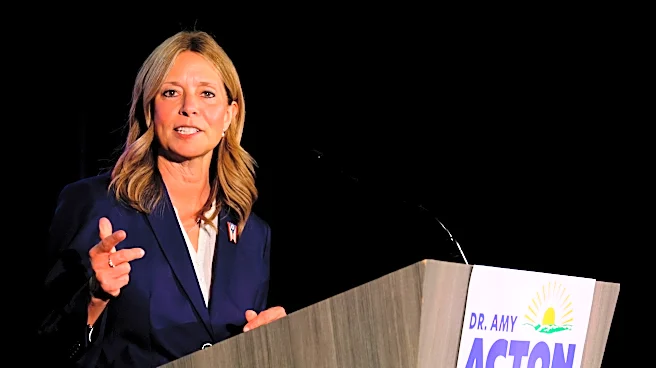
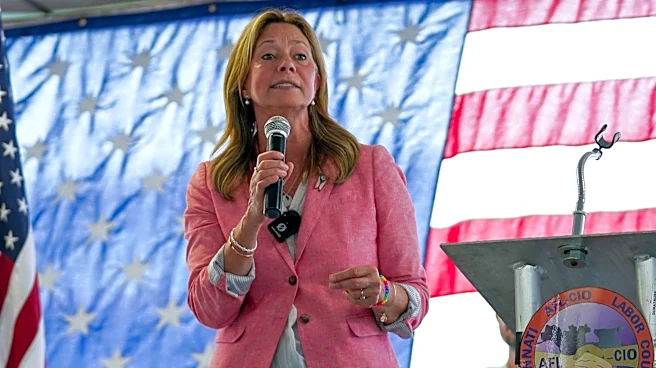
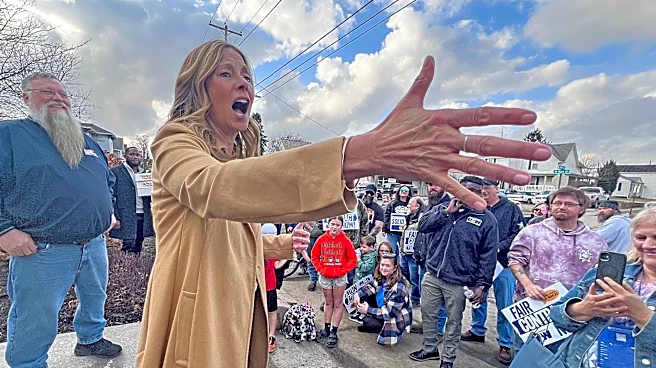
An armed individual, Patrick M. Havas, 38, lunged at Amy Acton, the Democratic nominee for Ohio governor, during an event at a county fair in Canfield. Authorities reported that Havas forced his way through a crowd towards Acton, injuring multiple fairgoers
in the process. State police intercepted Havas, who was found to be in possession of a taser and two pistols. Governor Mike DeWine (R) confirmed that Acton was unharmed, but others sustained injuries. The incident occurred during a tight gubernatorial race between Acton and Republican Vivek Ramaswamy. Both Governor DeWine and Ramaswamy's campaign condemned the act of violence, emphasizing that such threats have no place in politics.
Why It's Important?
This incident highlights the escalating concerns about political violence and the safety of public figures in the United States. The presence of an armed individual attempting to confront a political candidate at a public event underscores the volatile political climate and the potential for real-world harm. Such occurrences can deter individuals from participating in political discourse, whether as candidates, campaign staff, or attendees, thereby impacting democratic processes. The condemnation from both sides of the political spectrum, including Governor DeWine and Ramaswamy's campaign, indicates a bipartisan recognition of the severity of threats against political figures. This event could lead to increased security measures at political rallies and public appearances, potentially altering the accessibility and nature of political campaigning.
What's Next?
Authorities will likely continue their investigation into Patrick M. Havas's motives and any potential connections to extremist groups or individuals. The incident may prompt a review of security protocols for political candidates and public events in Ohio and potentially across the nation. Law enforcement agencies and campaign organizations might collaborate to implement enhanced protective measures, which could include more stringent crowd control, increased police presence, and stricter checks for weapons at political gatherings. This event could also fuel further public debate on gun control and the rhetoric surrounding political campaigns, with calls for de-escalation and civility in political discourse. The outcome of the ongoing gubernatorial race in Ohio may also be influenced by public perception of this incident and how candidates address safety concerns.
Beyond the Headlines
The attack on Amy Acton reflects a broader societal challenge concerning the normalization of aggressive behavior in political contexts. Beyond the immediate physical threat, such incidents can have a chilling effect on free speech and public assembly, essential components of a healthy democracy. The ease with which an armed individual could approach a candidate at a public event raises questions about the balance between security and accessibility in political engagement. This event could contribute to a growing sense of fear and division, making it harder for political leaders to connect with constituents directly. It also underscores the psychological toll on candidates and their families, who increasingly face personal risks in their pursuit of public service. Addressing this trend requires not only enhanced security but also a concerted effort to foster a more respectful and less confrontational political environment.