






What's Happening?
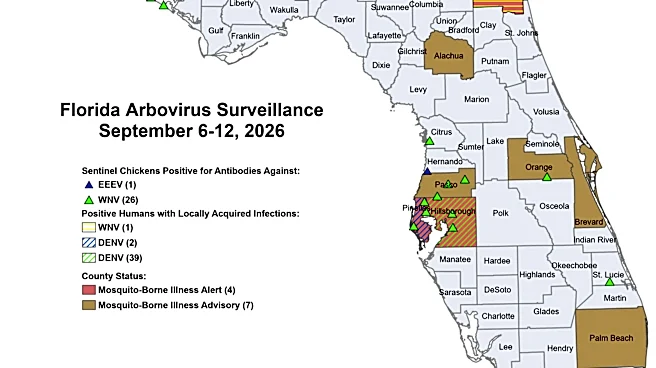
Orange County Mosquito Control in Florida has adopted new PCR technology to rapidly detect mosquito-borne illnesses, following the confirmation of two additional locally acquired dengue cases in Apopka. This technology allows the agency to test mosquito samples
in its own lab for viruses such as West Nile, Zika, and dengue, significantly reducing the time it takes to get results. Previously, suspected virus samples had to be sent to external labs, often taking days to a week for results. With the new in-house PCR testing, results can now be obtained within a day, sometimes even by the afternoon of the same day mosquitoes are collected and processed. This expedited testing process enables Orange County Mosquito Control to respond more quickly and efficiently to potential outbreaks, enhancing their ability to identify and mitigate illnesses in the local mosquito population. The Florida Department of Health has reported over 40 locally acquired dengue cases in Florida this month, with three in Orange County.
Why It's Important?
The implementation of rapid PCR testing by Orange County Mosquito Control is a critical advancement in public health, particularly in Florida, which is experiencing a rise in locally acquired dengue cases. The ability to obtain same-day results for mosquito-borne viruses allows for a much faster and more targeted response to potential disease threats. This speed is crucial for containing outbreaks, as it enables health officials to quickly identify affected areas and deploy control measures, such as targeted mosquito treatments, before the virus can spread further. This proactive approach can significantly reduce the risk of human infections, lessen the burden on local healthcare systems, and potentially save lives. Furthermore, the shift from relying on external labs to in-house testing represents a strategic investment in local public health infrastructure, providing greater autonomy and efficiency in disease surveillance and control efforts. The cost-effectiveness of in-house testing over time also ensures sustainable public health initiatives.
What's Next?
Orange County Mosquito Control will continue to utilize this new PCR technology to monitor mosquito populations for various viruses, including dengue, West Nile, and Zika. The enhanced surveillance capabilities will allow for more precise and timely interventions, such as focused spraying and public advisories. Health officials will likely continue to emphasize public education on preventive measures, including wearing protective clothing, using EPA-registered insect repellents, and eliminating standing water where mosquitoes breed. The Florida Department of Health will maintain its statewide surveillance for mosquito-borne illnesses, coordinating with local agencies like Orange County Mosquito Control to track and respond to emerging threats. The success of this rapid testing model in Orange County could also serve as a blueprint for other regions facing similar challenges with mosquito-borne diseases, potentially leading to broader adoption of such technologies across the U.S.
Beyond the Headlines
The adoption of advanced PCR technology by Orange County Mosquito Control highlights a broader trend in public health towards leveraging cutting-edge scientific tools for real-time disease management. This move signifies a proactive shift from reactive responses to predictive and preventative strategies in vector control. The increased efficiency in disease detection could also foster greater public trust and cooperation, as residents see more immediate and effective responses to health threats. Ethically, the rapid identification of infected mosquito populations allows for more targeted interventions, potentially reducing the environmental impact of widespread pesticide use. This technological integration also underscores the ongoing challenge of climate change, which is expanding the geographical range and activity periods of disease-carrying mosquitoes, making such rapid detection systems increasingly vital for maintaining public health security in vulnerable regions.