


What's Happening?
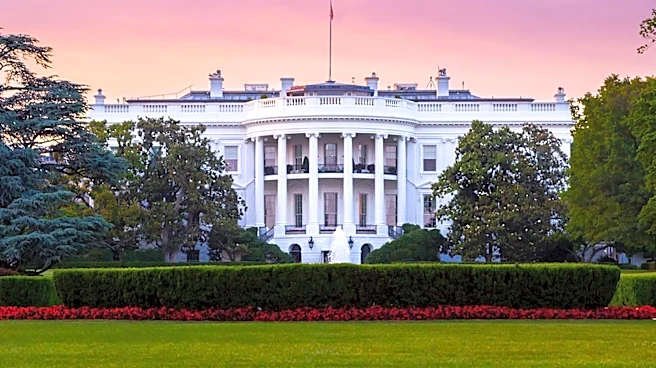
Pennsylvania Democratic Representative Mary Gay Scanlon has publicly accused the Trump administration of actively undermining the integrity of U.S. elections. Speaking at a forum focused on protecting voting rights, Scanlon stated that the administration is using
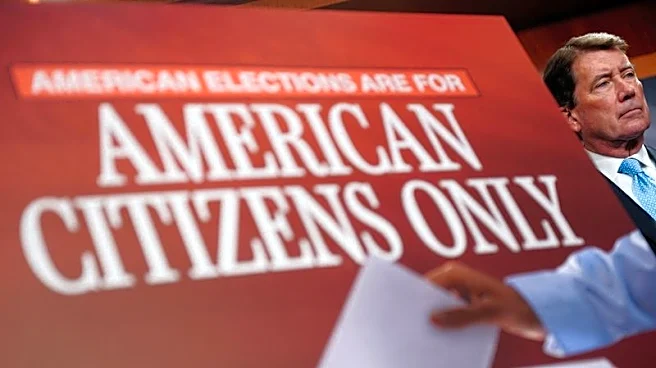
"phony claims about election integrity" to erode public trust. She further alleged that these efforts include defunding oversight bodies and systems designed to safeguard elections, as well as attempting to restrict ballot access through what she termed "21st century voter suppression tools," specifically citing the SAVE Act. This accusation comes as the Department of Justice, under the Trump administration, announced aggressive actions to secure midterm elections, including charging numerous individuals with unlawful voting and registration offenses. Acting Deputy Attorney General Trent McCotter emphasized that election integrity should be a nonpartisan issue, highlighting a significant increase in charges compared to the previous administration.
Why It's Important?
These accusations from Representative Scanlon are important because they highlight a deep partisan divide over the fundamental processes of U.S. democracy and election security. If public faith in election integrity is eroded, it can lead to decreased voter participation and a questioning of election outcomes, potentially destabilizing the political landscape. The debate over the SAVE Act, which mandates voter ID, proof of citizenship for registration, and in-person registration, illustrates a core disagreement: Republicans view it as a necessary measure to prevent fraud, while Democrats, like Scanlon, see it as a tool for voter suppression that could disenfranchise vulnerable populations. The differing approaches to election security, with the DOJ emphasizing prosecutions and Democrats focusing on access, underscore the ideological battle over who gets to vote and how those votes are counted, impacting the legitimacy of future elections and the democratic process itself.
What's Next?
The debate surrounding election integrity and voter access is expected to intensify as the midterm elections approach. The Department of Justice will likely continue its aggressive enforcement actions, potentially leading to more charges related to unlawful voting. Conversely, Democratic lawmakers and advocacy groups will likely continue to challenge these measures, particularly the SAVE Act, which remains stalled in Congress. The ongoing legal and political battles over voter ID laws, mail-in ballot regulations, and voter registration requirements will shape the accessibility and perceived fairness of upcoming elections. Public trust in government, already reported as low and decreasing, could be further impacted by these ongoing disputes, making clear communication and transparency from all stakeholders crucial for maintaining democratic stability.
Beyond the Headlines
Beyond the immediate political skirmishes, the accusations and counter-accusations regarding election integrity touch upon deeper societal issues concerning trust in institutions and the evolving nature of democratic participation. The concept of "election integrity" itself has become a highly politicized term, with each side interpreting it through their own lens—one focusing on preventing fraud, the other on ensuring universal access. This divergence can lead to a fragmented understanding of democratic principles and processes among the populace. The long-term implications include a potential for increased political polarization, where election outcomes are not universally accepted, and a weakening of the social contract that underpins democratic governance. Addressing these underlying issues requires a concerted effort to foster bipartisan consensus on election administration and to rebuild public confidence through transparent, verifiable, and accessible electoral systems.