







What's Happening?
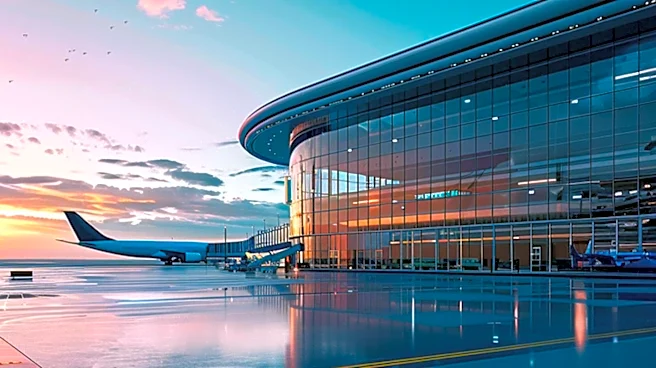
Juneau International Airport has officially put into service a new Rosenbauer 4x4 aircraft rescue and firefighting (ARFF) vehicle, with another, an Oshkosh Striker 6x6, expected to arrive within weeks. This addition aims to restore the airport's full
fleet of three specialized fire trucks, crucial for maintaining operational capabilities under Federal Aviation Administration (FAA) regulations. The new vehicle was welcomed with a traditional 'push-in' ceremony at the Glacier Fire Station. Capital City Fire/Rescue Chief Tom Hatley stated that these new 20-year apparatus will complete the fleet, ensuring the airport can accommodate all jet sizes and avoid potential shutdowns. Earlier this year, the airport faced limitations, only able to accommodate smaller jets, due to two of its three ARFF trucks being out of service, necessitating the borrowing of vehicles from other locations.
Why It's Important?
The upgrade to Juneau International Airport's ARFF fleet is critical for ensuring the safety and continuous operation of air travel in the region. FAA regulations mandate a certain number of operational ARFF trucks for airports to remain open and accommodate various aircraft sizes. A deficiency in this fleet, as experienced earlier this year, can lead to restrictions on flight operations, impacting passenger travel, cargo logistics, and emergency services. The new vehicles, with their large-capacity water storage, chemical extinguishers, and all-terrain capabilities, are essential for responding to aircraft emergencies, thereby protecting lives and property. This investment signifies a commitment to maintaining high safety standards and operational resilience for Juneau's air infrastructure.
What's Next?
The second new ARFF truck, an Oshkosh Striker, is expected to arrive within weeks, completing the Juneau International Airport's fleet of three specialized vehicles. Once both new trucks are fully operational and staff are trained, an open house is planned for October 10 at the fire station. This will mark the full restoration of the airport's emergency response capabilities, allowing for the return of borrowed ARFF trucks from Palmer and Texas. Airport Manager Andres Delgado noted that the fire station typically responds to two or three incidents monthly requiring an ARFF truck deployment, often for standby events rather than actual emergencies. The enhanced fleet will ensure the airport is prepared for any potential incident, maintaining compliance with FAA standards and ensuring uninterrupted service.
Beyond the Headlines
The acquisition of these advanced ARFF vehicles highlights a broader challenge faced by regional airports in maintaining specialized and often expensive emergency equipment. The incident earlier this year, where Juneau's airport nearly faced a temporary closure due to equipment malfunction, underscores the vulnerability of air travel infrastructure to aging fleets and the critical need for proactive investment. This situation also brings to light the inter-agency cooperation required, as evidenced by the borrowing of trucks from other jurisdictions. The long-term implications include not only enhanced safety but also economic stability for the region, as reliable air access is vital for tourism, commerce, and connecting remote communities. The commitment to a 20-year lifespan for these new apparatus suggests a strategic long-term planning approach to public safety and infrastructure resilience.