






What's Happening?
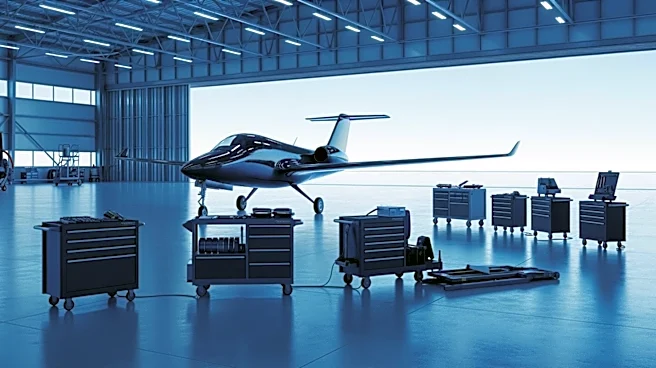
At NASA's Armstrong Flight Research Center in Edwards, California, ground crews play a crucial role in maintaining the readiness of the agency's aircraft for various missions. These crews, composed of mechanics with both military and civilian backgrounds,
are responsible for ensuring that each aircraft is in optimal condition for flight. The center recently added two F-15s and a Pilatus PC-12 to its fleet, which also includes high-altitude ER-2s and the X-59 X-plane. The maintenance staff is tasked with adapting to the diverse needs of these aircraft, which support a range of missions from science research to rocket launches. The crews perform tasks such as checking ejection seats, refueling, and replacing brakes and wiring, all of which are essential for the safe and reliable operation of the aircraft.
Why It's Important?
The work of NASA's ground crews is vital for the success of the agency's aeronautics and science missions. By ensuring that aircraft are mission-ready, these crews enable NASA to conduct high-speed research flights and high-altitude science campaigns safely. This maintenance work supports NASA's broader goals of advancing aeronautics and science, contributing to technological innovations and scientific discoveries. The ability to keep a diverse fleet operational also highlights the adaptability and expertise of the maintenance teams, which is crucial for the agency's ongoing and future missions.
What's Next?
As NASA continues to expand its fleet and mission capabilities, the role of ground crews will remain essential. The ongoing training and adaptation to new aircraft and technologies will be necessary to meet the evolving demands of NASA's missions. The maintenance teams will continue to ensure that aircraft are ready for immediate deployment, supporting both current operations and future projects that may arise as NASA pursues its goals in space exploration and scientific research.