

What's Happening?
Republican businessman Juan Pablo Segura has been appointed as the new U.S. Deputy Secretary of State for Western Hemisphere Affairs, a division of the U.S. State Department responsible for managing relations with countries across the Americas, including
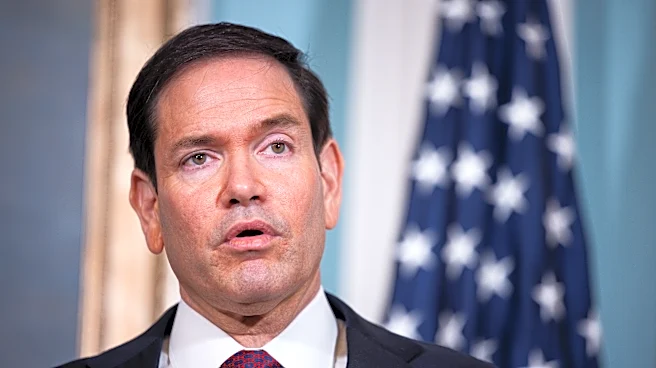
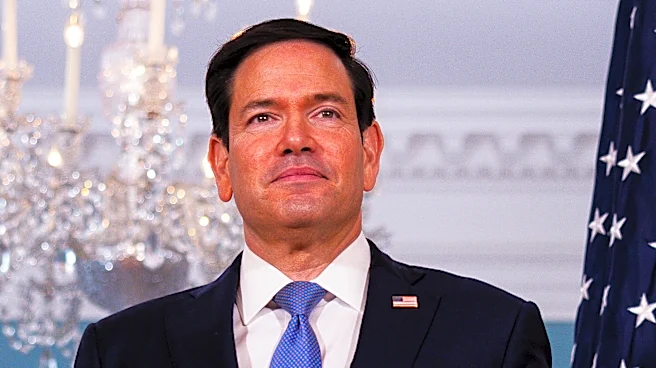
Brazil. Segura assumed office on Friday, August 14, replacing Michael Kozak, who had held the position on an acting basis. This appointment signals an intensified focus on Latin America by the President Trump administration. On his first day, Segura expressed his honor in serving President Trump, Marco Rubio (who heads the State Department arm), and the American people, stating his commitment to advancing President Trump's vision for a region safe from cartels and narco-terrorists, fostering prosperity, and securing U.S. borders. Segura has previously been vocal about Brazil, particularly criticizing Supreme Court Justice Alexandre de Moraes. In February 2025, he commented on Brazil's actions against U.S. technology platforms, asserting that blocking information access and imposing fines for refusing to censor individuals in the U.S. are incompatible with democratic values and freedom of expression. He further criticized Moraes in July and August, supporting Magnitsky Act sanctions against him for alleged human rights violations and for placing former Brazilian President Jair Bolsonaro under house arrest, urging that Bolsonaro be allowed to speak. Segura also warned that Moraes is "toxic to all legitimate businesses and individuals seeking access to the U.S. and its markets" and that U.S. sanctions cannot be invalidated by foreign courts.
Why It's Important?
The appointment of Juan Pablo Segura as Deputy Secretary of State for Western Hemisphere Affairs is significant for U.S. foreign policy in Latin America, particularly concerning economic relations and human rights. Segura's stated economic focus suggests a potential shift towards strengthening trade and investment ties in the region, which could benefit U.S. businesses seeking new markets and opportunities. His strong stance against Brazilian Supreme Court Justice Alexandre de Moraes, including his support for Magnitsky Act sanctions, indicates a more assertive U.S. approach to governance and human rights issues in Latin American countries. This could lead to increased pressure on nations perceived as undermining democratic values or human rights, potentially impacting diplomatic relations and economic partnerships. For U.S. companies operating in or considering expansion into Latin America, this appointment signals a U.S. administration that is prepared to use diplomatic and legal instruments to protect its interests and values, which could create both opportunities and challenges depending on the political climate of individual countries. The emphasis on securing borders and combating narco-terrorism also highlights a continued focus on regional security, which has implications for U.S. national security and resource allocation.
What's Next?
Following Juan Pablo Segura's appointment, observers anticipate a more pronounced economic focus in U.S. relations with Latin America, alongside continued scrutiny of human rights and democratic governance. Segura's past criticisms of Brazilian Supreme Court Justice Alexandre de Moraes suggest that the U.S. may continue to apply pressure on Brazil regarding issues of censorship and judicial overreach, potentially through diplomatic channels or further sanctions. This could lead to heightened tensions or a re-evaluation of bilateral relations between the U.S. and Brazil. Analysts believe that having a permanent official in this role, rather than an acting one, could improve communication between public and private sector representatives in both the U.S. and Latin American nations. However, Segura will need to align his messaging with that of his superiors, including Marco Rubio, who heads the State Department arm. The Trump administration's intensified agenda for Latin America, as indicated by this appointment, suggests that more initiatives aimed at regional security, economic prosperity, and combating illicit activities are likely to be unveiled. Businesses and governments in the region will be closely watching for specific policy announcements and diplomatic actions that reflect Segura's stated priorities and the broader administration's objectives.
Beyond the Headlines
Juan Pablo Segura's appointment and his prior public statements reveal a deeper ideological current within the Trump administration's foreign policy, particularly concerning the balance between national sovereignty and international human rights norms. His strong condemnation of actions by Brazilian Justice Alexandre de Moraes, framed as infringements on freedom of expression and democratic values, suggests a willingness to intervene in the internal affairs of sovereign nations when perceived U.S. values are at stake. This approach could set a precedent for how the U.S. engages with other countries in the Western Hemisphere facing similar challenges, potentially leading to a more interventionist foreign policy under the guise of promoting democracy and human rights. The use of Magnitsky Act sanctions against foreign officials, as supported by Segura, highlights a growing trend of leveraging economic and legal tools to achieve foreign policy objectives, moving beyond traditional diplomatic channels. This strategy could have long-term implications for international law and the principle of non-interference, potentially reshaping the dynamics of global governance. Furthermore, Segura's background as a businessman with Argentine descent, whose campaign for the Virginia state Senate was funded by his billionaire father, adds a layer of complexity to his appointment, raising questions about the intersection of personal wealth, political influence, and foreign policy decision-making.