
What's Happening?
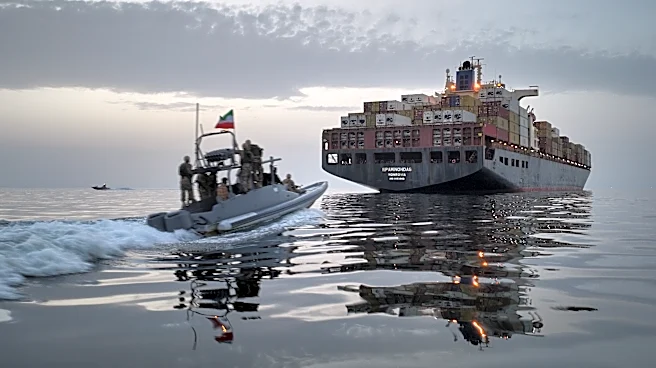
On April 29, 2026, Israeli military forces intercepted the Global Sumud Flotilla, a humanitarian aid mission bound for Gaza, in the Mediterranean Sea. The flotilla reported that Israeli military speedboats
used lasers and semi-automatic weapons to order participants to the front of the boats and get on their hands and knees. Israel's actions were described as illegal under international law by flotilla organizers, who argued that Israel has no jurisdiction in these waters. In contrast, Israeli officials stated that the interception was necessary to enforce a lawful maritime security blockade and protect national security interests. The operation was carried out without injuries or chaos, and was praised for its precision and strategic clarity by Israeli sources.
Why It's Important?
The interception of the Global Sumud Flotilla highlights ongoing tensions between Israel and groups attempting to breach the Gaza blockade. This incident underscores the complex legal and diplomatic challenges surrounding maritime security and humanitarian efforts in the region. For Israel, the operation is a demonstration of its commitment to national security and its ability to enforce maritime laws. However, it also raises questions about the legality of such actions under international law and the potential for diplomatic fallout with countries that support the flotilla. The incident could impact Israel's relations with countries like Spain, Turkey, Italy, and Greece, which have been criticized for allowing such flotillas to depart from their ports.
What's Next?
In response to the interception, there may be calls within Israel for legislative measures to deter future flotilla attempts. This could include laws mandating the confiscation of vessels used in blockade-running operations and imposing harsher penalties on participants. Additionally, Israel may reconsider its diplomatic relations with countries that permit flotillas to depart from their ports. The international community may also respond, potentially leading to debates over the legality of Israel's actions and the broader implications for maritime law and humanitarian efforts in the region.
Beyond the Headlines
The interception of the Global Sumud Flotilla may have deeper implications for international maritime law and the rights of states to enforce blockades. It raises ethical questions about the balance between national security and humanitarian aid, and the role of international law in mediating such conflicts. The incident could also influence future strategies of both flotilla organizers and Israeli authorities, potentially leading to new legal and diplomatic frameworks for addressing similar situations.