






What's Happening?
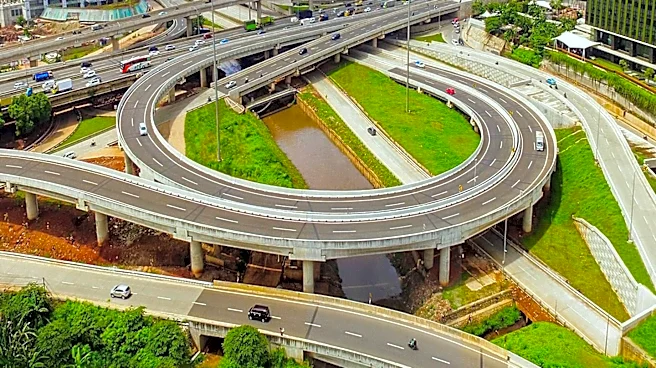
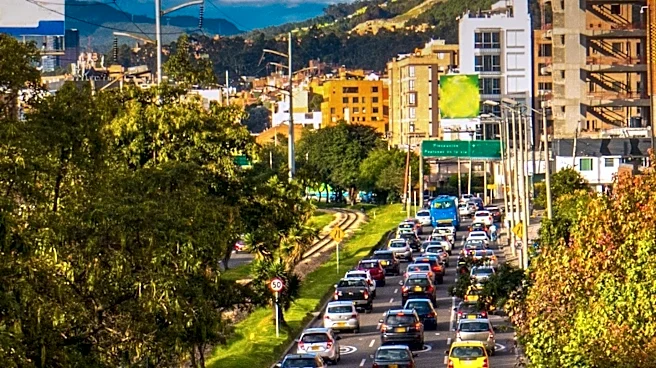
Decades of research in transport economics indicate that increasing road capacity, such as building new roads or widening existing ones, does not always alleviate traffic congestion and can, under certain conditions, worsen it. This phenomenon is explained
by the concept of traffic equilibrium and the 'Braess's Paradox.' When a new road is introduced, drivers, acting in their self-interest to minimize individual travel time, may switch routes. This shift can lead to a new equilibrium where overall travel times for everyone are longer than before the new road was built. The paradox arises because individual rational choices do not necessarily lead to a socially optimal outcome. Furthermore, expanding road capacity often induces additional car travel, a phenomenon known as 'induced demand,' which further negates the long-term benefits of new infrastructure.
Why It's Important?
This research challenges the conventional wisdom that more roads automatically lead to less traffic, which has significant implications for urban planning and infrastructure investment in the U.S. Billions of dollars are spent annually on road expansion projects, often with the stated goal of reducing congestion. If these projects are counterproductive, resources could be misallocated, leading to continued or worsened traffic problems, increased pollution, and reduced quality of life in urban areas. Understanding this paradox is crucial for policymakers and transportation authorities to develop more effective strategies, such as investing in public transit, promoting active transportation, or implementing demand management techniques, rather than solely relying on capacity expansion. This shift in perspective could lead to more sustainable and efficient urban development.
What's Next?
The insights from transport economics suggest a need for a re-evaluation of current approaches to traffic management and infrastructure development. Future urban planning initiatives may increasingly focus on integrated transportation systems that prioritize public transit, cycling, and walking infrastructure, alongside smart traffic management technologies. Policymakers might explore strategies to influence driver behavior, such as congestion pricing or incentives for carpooling, to achieve a system optimum rather than relying on individual user equilibrium. Further research into identifying road segments that can be removed to improve overall network performance, as well as practical evaluations of highway removal projects, could become more prominent. The goal will be to move towards solutions that consider the entire transportation ecosystem and human behavioral responses.
Beyond the Headlines
The Braess's Paradox extends beyond traffic management, offering a powerful metaphor for complex systems where individual optimization can lead to collective sub-optimality. This principle can be observed in various fields, from network design to resource allocation and even social dynamics. Ethically, it raises questions about the balance between individual freedom of choice and collective well-being, particularly in public goods like infrastructure. Culturally, it challenges the deeply ingrained American reliance on personal automobiles and the perception that 'more' infrastructure is always 'better.' A deeper understanding of this paradox could foster a more nuanced public discourse around urban development, encouraging a shift towards systemic thinking and collaborative solutions that prioritize long-term societal benefits over immediate, individual gains.