







What's Happening?
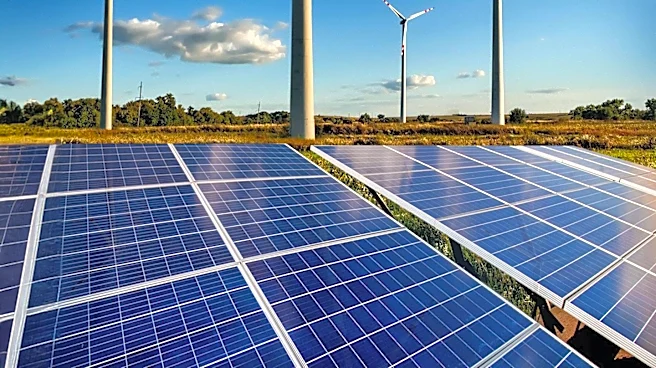
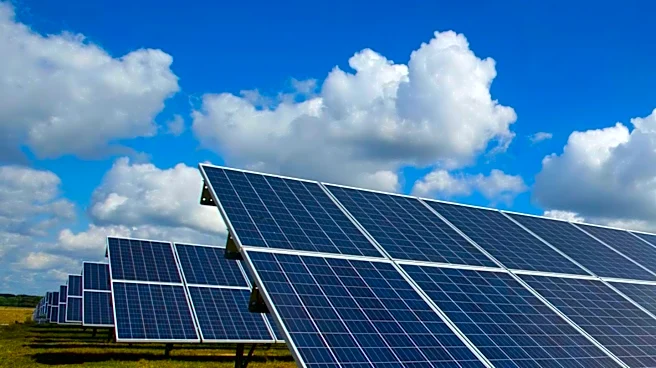
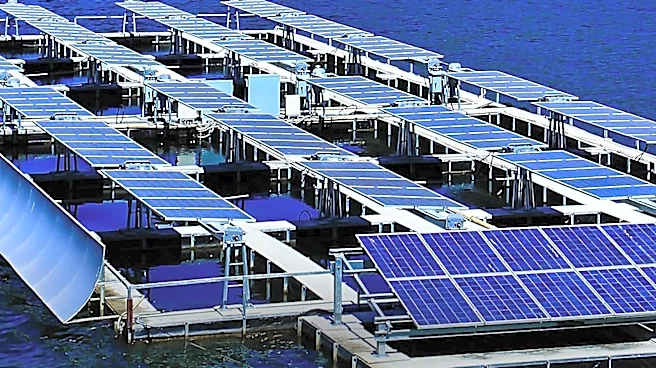
In May, California achieved a significant milestone by generating 51% of its electricity from solar power, marking the first time the state surpassed the halfway mark for an entire month. This achievement includes contributions from both large-scale solar installations
and rooftop solar arrays. The California Independent System Operator (CAISO) played a crucial role by managing a robust battery storage system that shifts solar energy production to meet evening demand. This development highlights California's progress in reducing reliance on fossil fuels, particularly natural gas, which has been steadily declining in the state's energy mix.
Why It's Important?
California's achievement underscores the potential for solar power to play a dominant role in the energy landscape, setting a precedent for other states and countries aiming to increase their renewable energy capacity. The integration of solar power with advanced battery storage systems demonstrates a viable path for achieving energy sustainability and reducing carbon emissions. This milestone also reflects the effectiveness of state policies and investments in renewable energy infrastructure, which can serve as a model for other regions seeking to transition to cleaner energy sources.
What's Next?
As California continues to expand its solar and battery storage capabilities, the state is likely to see more months where solar power exceeds 50% of the energy mix. This progress will contribute to meeting California's ambitious renewable energy targets and could inspire similar efforts in other states. The ongoing development of energy storage technologies will be critical in managing the variability of solar power and ensuring a reliable energy supply. Policymakers and industry leaders will need to address challenges related to grid integration and infrastructure development to sustain this momentum.