

What's Happening?
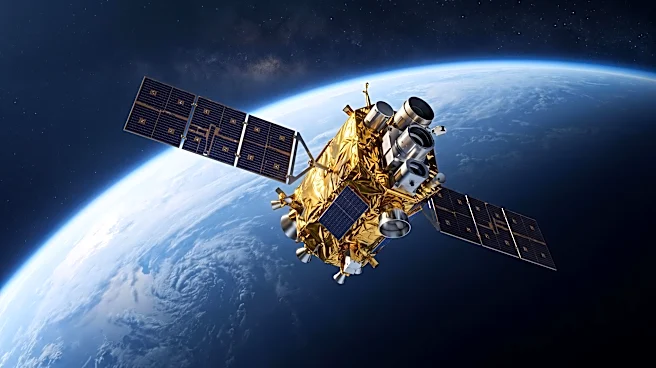
NASA's Total and Spectral Solar Irradiance Sensor-2 (TSIS-2) mission has successfully completed a series of rigorous environmental tests, moving it closer to its targeted launch in early 2027. The satellite underwent thermal vacuum testing, where it was
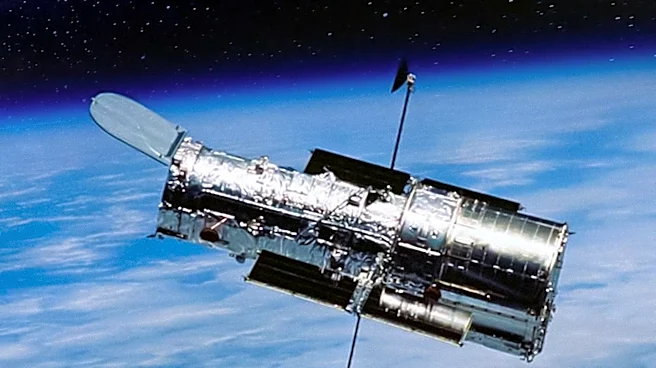
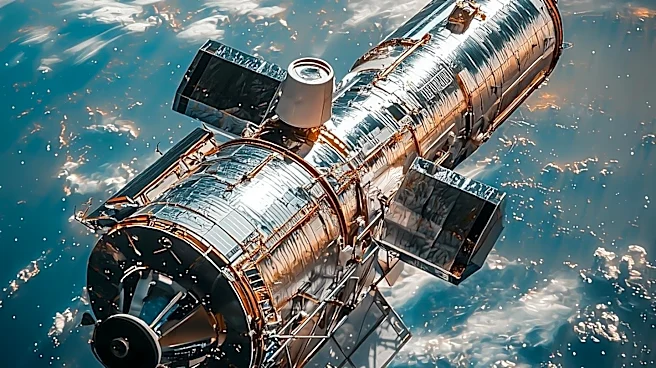
exposed to below-freezing temperatures and vacuum-level pressures to simulate the harsh conditions of low Earth orbit. Additionally, the spacecraft endured vibration testing, designed to mimic the intense shaking and forces it will experience during launch. These tests, conducted by General Atomics Electromagnetic Systems (GA-EMS), confirmed the satellite's ability to perform as designed in space. The TSIS-2 mission aims to extend continuous records of total solar irradiance measurements, which began in 1978, and spectral solar irradiance measurements, which started in 2003. The mission is a collaborative effort led by NASA, with GA-EMS designing and manufacturing the spacecraft, and the University of Colorado’s Laboratory for Atmospheric and Space Physics (LASP) developing the instruments and supporting on-orbit operations.
Why It's Important?
The successful completion of these tests is a crucial milestone for the TSIS-2 mission, ensuring the reliability and functionality of the spacecraft and its instruments in the extreme space environment. The data collected by TSIS-2 will be vital for climate science, providing insights into how changes in the Sun's energy output influence Earth's climate. By extending long-term records of solar irradiance, scientists can better understand natural climate variability and improve the accuracy of climate predictions. This mission contributes to a continuous dataset that is essential for distinguishing between natural solar influences and anthropogenic factors affecting Earth's climate. The collaboration between NASA, GA-EMS, and LASP also highlights the importance of public-private partnerships in advancing space science and technology, leveraging specialized expertise from different sectors to achieve complex scientific objectives.
What's Next?
With the environmental testing complete, the TSIS-2 spacecraft is now prepared for transport to its launch site. The next steps involve packing the satellite into a custom shipping container and integrating it with Rocket Lab’s Electron rocket in New Zealand. The launch is targeted for early 2027. Following launch, TSIS-2 will begin its mission in low Earth orbit, where its two instruments—the Total Irradiance Monitor and the Spectral Irradiance Monitor—will measure the intensity of sunlight reaching Earth's atmosphere. The data collected will then be processed by the LASP team, contributing to ongoing scientific research on solar influence on Earth's climate. The mission's success will depend on the flawless execution of these remaining pre-launch and operational phases.
Beyond the Headlines
The TSIS-2 mission represents a continuation of NASA's long-standing commitment to Earth science and climate monitoring. The continuous, long-term datasets generated by missions like TSIS-2 are foundational for understanding complex Earth systems and detecting subtle, long-term trends that might otherwise be missed. This mission underscores the scientific community's reliance on sustained observational capabilities to address critical questions about climate change and its drivers. Furthermore, the mission's focus on solar irradiance highlights the Sun's fundamental role as the primary energy source for Earth's climate, emphasizing that while human activities are significant, natural variations also play a part. The data will help refine climate models, leading to more robust projections and better-informed policy decisions regarding environmental management and adaptation strategies.