






What's Happening?
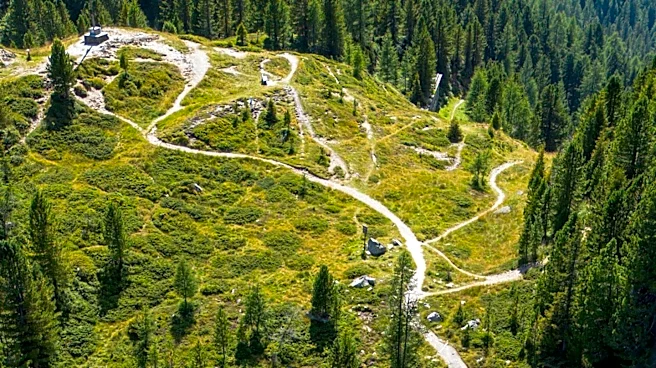
The popular Tour du Mont-Blanc hiking circuit, which spans 170 kilometers through France, Italy, and Switzerland, may implement a reservation system starting in 2027. This proposal comes from French authorities, specifically Jean-Marc Peillex, Mayor of
Saint-Gervais-les-Bains, who cites significant overcrowding, littering, and disrespectful behavior on the trail. Approximately 80,000 people hike parts of the circuit annually, leading to conditions where hikers are forced to walk in single file, diminishing the experience. If the proposals are successful, travelers would need to reserve a spot in a hut or an authorized bivouac zone in advance for sections of the trail within several French municipalities. The classic circuit typically takes between seven and eleven days to complete.
Why It's Important?
This potential reservation system highlights a growing challenge in managing popular natural attractions globally: balancing accessibility with preservation and visitor experience. For the U.S. outdoor recreation industry, this development serves as a case study for managing high-demand trails and national parks. Overcrowding can lead to environmental degradation, diminished visitor satisfaction, and increased operational costs for maintenance and waste management. Implementing reservation systems, while potentially limiting spontaneous access, could ensure a more sustainable and enjoyable experience for hikers, protecting the natural beauty and ecological integrity of such iconic routes. It also underscores the need for international cooperation in managing cross-border natural resources, as seen with the call for coordination between Switzerland, Italy, and France.
What's Next?
Discussions and coordination among French, Italian, and Swiss authorities are expected to continue regarding the implementation of a reservation system for the Tour du Mont-Blanc. Mayor Jean-Marc Peillex and Joachim Rausis, mayor of Orsières in Switzerland, have both emphasized the need for better regulation and cross-border coordination. If the proposals are approved, travelers planning to hike the Tour du Mont-Blanc from spring 2027 onwards will likely need to secure reservations for overnight stays in huts or designated bivouac zones. This could lead to changes in how tour operators and individual hikers plan their trips, potentially requiring earlier booking and more structured itineraries to ensure accommodation availability.
Beyond the Headlines
The move to a reservation system for the Tour du Mont-Blanc reflects a broader shift in how natural and wilderness areas are managed in the face of increasing tourism. It raises questions about the commodification of nature and the balance between public access and environmental protection. While aimed at preserving the trail's integrity and enhancing visitor experience, such systems can also create barriers for spontaneous travelers or those with limited resources, potentially altering the demographic of hikers. The ethical implications of restricting access to natural landscapes, even for conservation purposes, will likely be a subject of ongoing debate, influencing similar decisions for other heavily trafficked natural sites worldwide, including those in the U.S.