



What's Happening?
The U.S. Coast Guard is actively searching for six individuals after losing contact with their vessel, the Mariana, off the coast of Guam following Typhoon Sinlaku. The 145-foot dry cargo vessel, registered in the U.S., reported a loss of its starboard
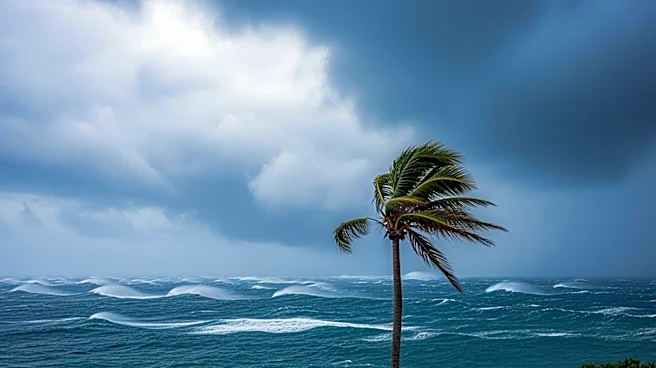
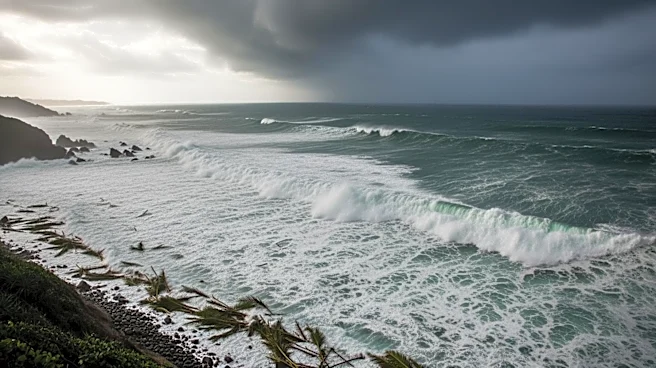
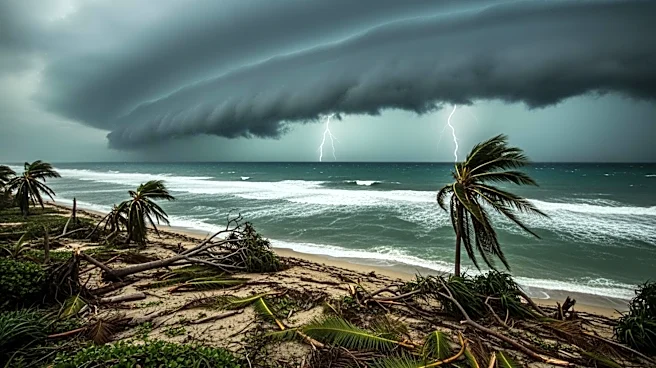
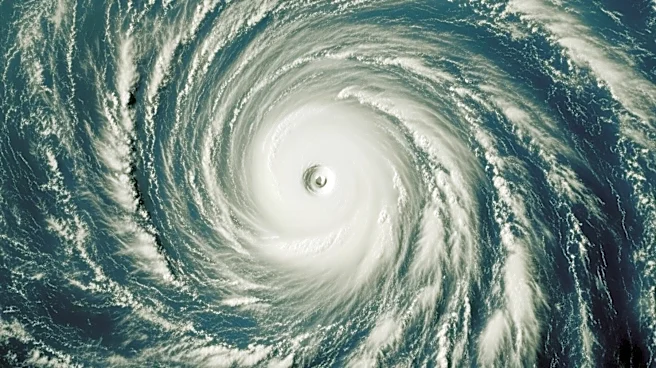
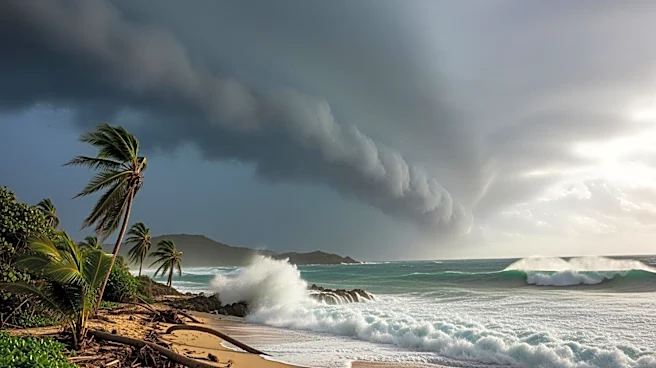
engine on April 15, prompting a request for assistance. Despite establishing a communication schedule, contact was lost on April 16. A Coast Guard HC-130 Hercules aircraft was deployed for the search but had to return due to adverse weather conditions. The search is set to resume as weather permits. The last known position of the vessel was approximately 125 miles north-northwest of Saipan. The nationalities of the crew remain unknown. Typhoon Sinlaku has caused significant damage in the Northern Mariana Islands, including Tinian and Saipan, and flash flooding in Guam.
Why It's Important?
This incident highlights the challenges faced by maritime operations in the Pacific, especially during severe weather events like Typhoon Sinlaku. The search and rescue efforts underscore the critical role of the U.S. Coast Guard in ensuring maritime safety. The typhoon's impact on infrastructure, such as power and water systems, poses ongoing challenges for local communities and emergency responders. The involvement of multiple federal agencies, including FEMA and the Department of Defense, illustrates the coordinated response required to address such complex emergencies. The situation also emphasizes the vulnerability of island communities to extreme weather and the importance of preparedness and resilience in disaster-prone regions.
What's Next?
The U.S. Coast Guard will continue its search operations for the missing crew as weather conditions improve. Efforts to reopen the Port of Guam and other regional ports are underway, with the Coast Guard prioritizing these tasks. Federal agencies will continue to assess and address the damage caused by Typhoon Sinlaku, with a focus on restoring essential services and infrastructure. The mission is expected to extend over several months, particularly in the Northern Marianas, where significant impacts have been observed. The U.S. Air Force will also conduct assessments in remote areas to determine further needs.