


What's Happening?
Pulaski County Republican Committee Chairman Dale Custer has appointed Marianne Harrington as an interim Pulaski County election commissioner. This appointment follows the resignation of Michael White from the election commission. Custer stated that it is crucial
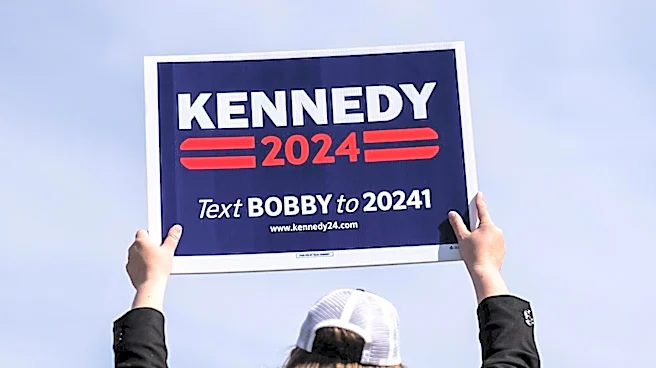
for the Pulaski County election commission to be fully staffed during the current election season. Harrington will serve until a permanent replacement for White's position can be elected by the Pulaski County Republican committee. White resigned as chairman of the Pulaski County Board of Election Commissioners last Wednesday, effective immediately, after the state Republican Party executive committee voted to remove him as a party member. White cited "politically motivated efforts by the Republican Party of Arkansas to target and remove me from office" as the reason for his resignation, aiming to prevent an administrative crisis for critical election processes. The state Republican Party Executive Committee voted on September 4 to remove White as a party member, with executive director Drew Martin stating that White's support for a candidate from another party confirmed the rules review process worked.
Why It's Important?
This development is important as it highlights internal party conflicts and their potential impact on election administration at the local level. The swift appointment of an interim commissioner by the Pulaski County Republican Committee Chairman underscores the perceived urgency of maintaining a fully staffed election commission, especially during an active election cycle. The controversy surrounding Michael White's removal from the Republican Party and his subsequent resignation from the election commission raises questions about party loyalty, candidate endorsements, and the independence of election officials. White's claim of "politically motivated efforts" suggests a broader struggle within the Republican Party of Arkansas regarding adherence to party lines and support for nominees. This situation could influence voter confidence in the impartiality of election processes and potentially set a precedent for how political parties address dissent or perceived disloyalty among their members serving in election oversight roles. The outcome of the permanent replacement election will further indicate the direction the Pulaski County Republican Committee intends to take regarding its representation on the election commission.
What's Next?
Marianne Harrington will serve as the interim Pulaski County election commissioner until the Pulaski County Republican committee elects a permanent replacement for Michael White. The election commissioners are scheduled to hold their next meeting on Thursday, where they will decide on their next chairman. The other commissioners currently include Republican Raymond Jarvis and Democrat Steve Harrelson. The state Republican Party's actions against White, stemming from accusations of supporting non-Republican candidates, suggest a continued focus on party unity and adherence to party platforms, particularly as the November 3 general election approaches. The general election will see Democrat Fred Love and Libertarian Colt Shelby challenge Republican nominee Sarah Huckabee Sanders for governor, and Republican Kim Hammer, Democrat Kelly Grappe, and Libertarian Mike Pakko vie for secretary of state. The process of electing a permanent commissioner will be closely watched for indications of the Republican Party's strategy in maintaining control and influence over local election bodies.
Beyond the Headlines
The situation in Pulaski County extends beyond a simple personnel change, touching upon deeper issues of political party discipline and the integrity of election administration. The removal of Michael White from the Republican Party for allegedly supporting candidates from other parties, and his subsequent resignation from an election oversight role, raises concerns about the potential for partisan pressure to influence the non-partisan functions of election commissions. This incident could contribute to a broader debate about the role of political parties in local election governance and the extent to which party loyalty should dictate the actions of officials responsible for fair elections. The use of online slang like "Based" in political commentary, as cited in the complaint against White, also highlights the evolving nature of political discourse and the challenges parties face in monitoring and regulating their members' public expressions. This event may prompt discussions on the balance between party cohesion and the independence required for election officials to perform their duties without undue political influence, potentially impacting future guidelines for party membership and election commission appointments.