




What's Happening?
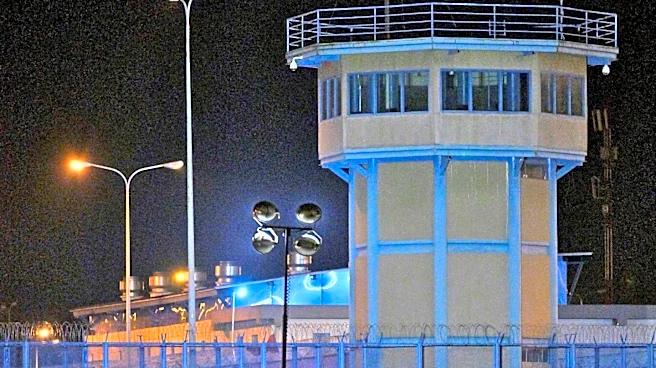
U.S. Immigration and Customs Enforcement (ICE) has accused U.S. Rep. Teresa Leger Fernández of violating a signed visitation agreement during her tour of the Torrance County Detention Facility. According to ICE, Leger Fernández attempted to speak with
detainees without prior consent, despite the agreement requiring advance scheduling for such meetings. ICE claims that facility officials informed her she could not do so, but she then allegedly shouted at detainees and tried to approach them, disrupting operations and necessitating intervention. In response, Leger Fernández's office stated that she had submitted authorization papers to speak with two detainees before her visit, but these forms were not provided to the detainees. Her office also indicated that this was the first time they had encountered such a policy, as she had been able to speak with detainees during previous visits.
Why It's Important?
This incident highlights ongoing tensions and differing interpretations of protocols between elected officials and federal immigration enforcement agencies regarding oversight and access to detention facilities. The ability of members of Congress to conduct thorough and unhindered inspections of such facilities is crucial for ensuring transparency, accountability, and the welfare of detainees. If visitation rules are perceived as being inconsistently applied or used to obstruct oversight, it could raise concerns about the conditions within these facilities and the treatment of individuals held there. The dispute also underscores the broader debate surrounding immigration detention practices and the role of congressional oversight in safeguarding civil liberties and human rights within the immigration system.
What's Next?
The immediate next steps are unclear, but this incident could lead to further exchanges between U.S. Rep. Leger Fernández's office and ICE regarding visitation policies and the specific events of the tour. It may prompt a review of existing protocols for congressional visits to detention facilities to clarify expectations and prevent future misunderstandings. Depending on the outcome, there could be calls for greater transparency from ICE regarding its visitation rules or for legislative action to standardize access for elected officials. The incident may also fuel ongoing discussions about the conditions and oversight of immigration detention centers, potentially drawing more public and media attention to these facilities.
Beyond the Headlines
Beyond the immediate dispute, this event touches upon the fundamental principle of government oversight and the balance of power between legislative and executive branches. The ability of elected representatives to directly observe and assess federal operations, particularly those involving vulnerable populations, is a cornerstone of democratic accountability. Any perceived impediment to this oversight can erode public trust and raise questions about the transparency of government institutions. Furthermore, the incident reflects the broader political climate surrounding immigration, where issues of enforcement, detention, and human rights are often highly contentious. It underscores the challenges in ensuring humane treatment and due process within the immigration system, especially when access and information are disputed.