



What's Happening?
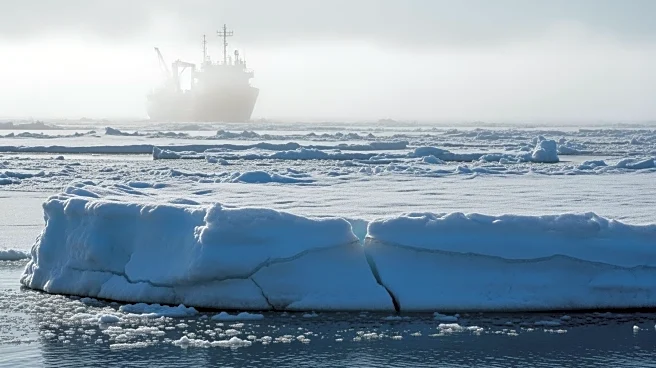
Russia's efforts to ship liquefied natural gas (LNG) from the Arctic LNG 2 site to China have been disrupted by early thick winter ice. The Russian-flagged LNG carrier Buran, one of four vessels involved in the export operation, has been forced to retreat
after multiple failed attempts to navigate through the ice. The Buran, along with other Arc4 class vessels, was designed for lighter ice conditions and requires icebreaker escorts. The early onset of thick ice has posed significant challenges to maintaining the LNG export flow from the Arctic terminal.
Why It's Important?
The disruption of LNG shipments due to early thick ice highlights the challenges of operating in the Arctic region, where climate conditions can significantly impact energy logistics. This development may affect Russia's ability to meet its LNG export commitments to China, potentially leading to supply shortages and price fluctuations in the global LNG market. The situation also underscores the importance of icebreaker support and the need for vessels capable of navigating harsh Arctic conditions. The early ice formation may prompt Russia to accelerate the deployment of more robust ice-class vessels to maintain its export operations.
What's Next?
Russia may need to enhance its icebreaker fleet and deploy more advanced ice-class vessels to ensure the continuity of LNG exports from the Arctic. The early ice conditions could also lead to a reassessment of shipping routes and schedules to mitigate future disruptions. Additionally, the situation may prompt further investment in Arctic infrastructure and technology to support year-round energy exports. The global LNG market will be closely monitoring these developments, as any prolonged disruption could impact supply and pricing dynamics.