





What's Happening?
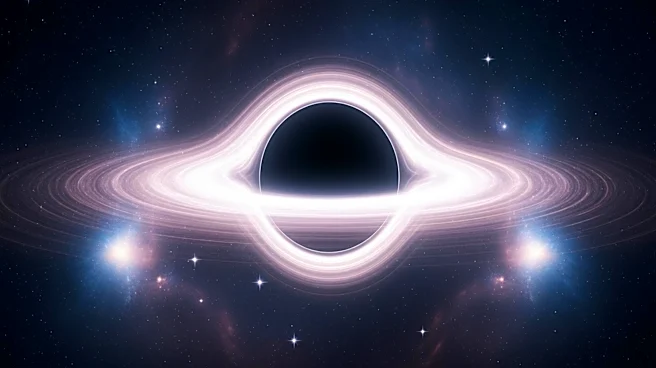
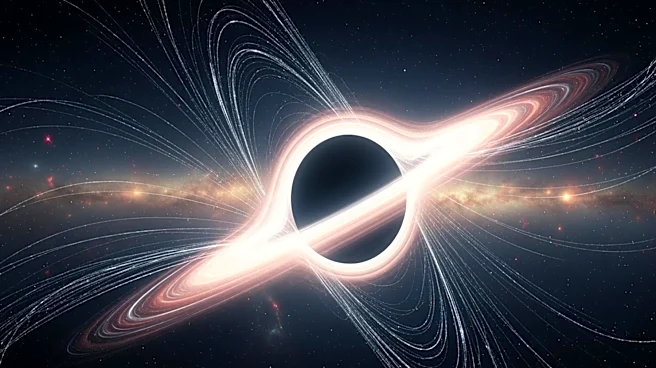
Researchers have detected evidence of wind from Sagittarius A*, the supermassive black hole at the center of the Milky Way galaxy. Using advanced radio telescopes in Chile, scientists mapped cold gas around the black hole and identified a cavity about
3 light-years long, suggesting the presence of a wind of hot gas. This discovery addresses a long-standing mystery about why Sagittarius A* appeared to lack the outflows observed in other supermassive black holes. The findings were published in The Astrophysical Journal Letters, marking a significant advancement in understanding black hole behavior.
Why It's Important?
The detection of wind from Sagittarius A* is crucial for understanding the dynamics of supermassive black holes and their role in galaxy evolution. These outflows are essential for regulating the growth of black holes and distributing energy within their host galaxies. The discovery confirms that Sagittarius A* behaves similarly to other supermassive black holes, reinforcing existing theories about black hole physics. This research could lead to new insights into the mechanisms driving black hole winds and their impact on the surrounding environment, influencing future studies in astrophysics and cosmology.
What's Next?
Researchers plan to expand their observations to map a larger region around Sagittarius A* and create a 'movie' of the gas approaching the black hole. This will help scientists understand how the black hole consumes gas and the full impact of the wind on its surroundings. The study may prompt further investigations into the magnetic fields and other factors influencing black hole winds, potentially leading to new discoveries about the fundamental forces at play in the universe. Continued advancements in telescope technology will likely enhance the ability to study these phenomena in greater detail.