





What's Happening?
Researchers at UC Riverside are undertaking a comprehensive study of the wild donkey population in the Inland Empire to better understand their behavior, population dynamics, and ecological impact. This initiative aims to provide data that can help mitigate
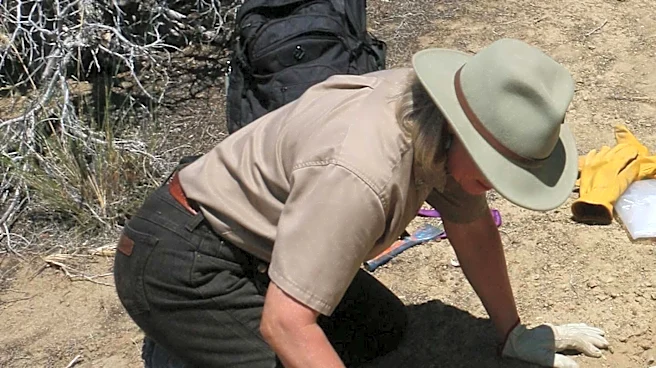
conflicts between the donkeys and human residents. The wild burros, considered an unofficial mascot by UC Riverside students, pose challenges for surrounding communities due to potential car crashes, property damage, and injuries. Associate professor Marko Spasojevic is leading the research, which includes deploying motion-activated wildlife cameras to track and count the population. The team also plans to analyze poop samples to understand feeding habits and, if funding permits, use GPS collars to monitor movements. Additionally, genetic technology will be used to trace the origin of the Inland Empire's wild donkey herd. The study seeks to address the lack of scientific data on this unique urban-adjacent donkey population, which is estimated to be several hundred strong and frequently wanders into residential areas.
Why It's Important?
This research is crucial for developing effective strategies for human-wildlife coexistence in the Inland Empire, where urban development continues to expand into natural habitats. The presence of wild donkeys in close proximity to communities creates public safety concerns, including traffic accidents and potential human-animal interactions that can lead to injury. Understanding the donkeys' population growth, movement patterns, and ecological role will enable local authorities to make informed decisions regarding population management, such as implementing barriers or wildlife overpasses to reduce collisions. The study also aims to clarify the donkeys' impact on the ecosystem, including their role in grazing non-native grasses versus potential soil erosion. By providing scientific data, the UC Riverside team hopes to de-escalate tensions surrounding donkey management, which have previously led to community disputes and even acts of violence against the animals.
What's Next?
In the immediate future, graduate student Wyatt Hall will continue deploying motion-activated wildlife cameras to gather data on the burro population size and growth rates. Researchers plan to analyze these findings to assess the urgency of interventions like traffic mitigation measures. Further steps include analyzing donkey poop samples to understand their diet and ecological impact. If additional funding is secured, the team intends to equip wild donkeys with GPS collars to gain detailed insights into their movements and how seasonal changes influence their proximity to urban areas. The genetic study to determine the origin of the herd is also underway, which could provide valuable historical context for their presence in the region. The findings from these ongoing studies are expected to inform Riverside County's future management policies for the wild donkey population, aiming for a more harmonious coexistence.
Beyond the Headlines
The UC Riverside donkey study highlights a broader national challenge of managing wildlife populations in increasingly urbanized landscapes. The conflict between preserving natural habitats and ensuring public safety and property protection is a recurring theme across the U.S. This research could serve as a model for other regions facing similar human-wildlife interface issues, particularly with large mammals. The ethical considerations of wildlife management, including population control, relocation, and public education, are central to this dilemma. The study also touches upon the cultural significance of these animals, as they have become an unofficial mascot for the university, creating a complex dynamic between affection for the animals and the practical challenges they present. The long-term implications involve developing sustainable urban planning that integrates wildlife corridors and minimizes human-animal conflict, fostering a more balanced ecological future.