







What's Happening?
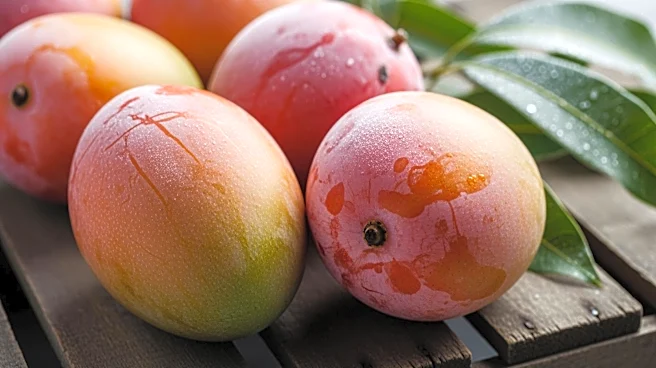
Israeli mango growers are experiencing a severe crop crisis following a cold and rainy spring that devastated orchards around the Sea of Galilee. The adverse weather conditions in March have led to an estimated 80% reduction in mango yields compared to the previous
year. Farmers anticipate that this year's harvest will only reach 20% to 30% of last year's output. This situation follows a challenging 2025 season where an oversupply of mangoes led to plummeting prices and unsold produce. The current crisis is attributed to low temperatures during the flowering season, which hindered pollination and fruit development. As a result, much of the fruit is too small or damaged to sell, likely leading to higher consumer prices.
Why It's Important?
The drastic reduction in mango yields is expected to have significant economic implications for Israeli farmers and the broader agricultural sector. With a substantial decrease in supply, consumer prices for mangoes are likely to rise sharply, affecting both local and international markets. The crisis highlights the vulnerability of agricultural production to climate variability and extreme weather events. Farmers, who have already faced market disruptions due to geopolitical issues and export challenges, now confront additional financial strain. The situation underscores the need for adaptive strategies in agriculture to mitigate the impacts of climate change and ensure food security.
What's Next?
In response to the crop failure, farmers and agricultural stakeholders may seek government assistance or insurance claims to offset financial losses. There could be increased efforts to develop more resilient crop varieties or implement protective measures against adverse weather conditions. The agricultural community may also advocate for policy changes to support farmers facing climate-related challenges. Additionally, consumers should prepare for higher mango prices and potential shortages in the market. The situation may prompt discussions on sustainable agricultural practices and investment in climate-resilient infrastructure.
Beyond the Headlines
The ongoing challenges faced by Israeli mango growers reflect broader issues of climate change and its impact on global agriculture. As weather patterns become increasingly unpredictable, farmers worldwide may need to adapt to new environmental realities. This situation also raises questions about food security and the resilience of supply chains in the face of climate-induced disruptions. The economic strain on farmers could lead to shifts in agricultural practices, including diversification of crops and investment in technology to enhance productivity and sustainability.