







What's Happening?
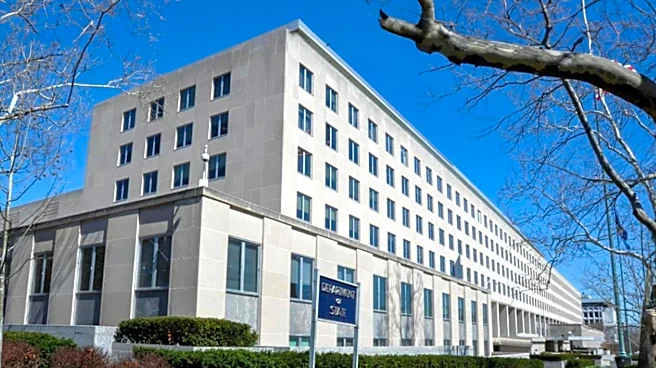
The U.S. Department of State has rejected the Taliban's request for American investment in Afghanistan's mineral resources, reaffirming its stance that the Taliban is a 'global terrorist group.' This decision comes after Taliban Foreign Minister Amir
Khan Muttaqi publicly invited U.S. companies to invest in Afghanistan's mining, infrastructure, agriculture, and trade sectors. The U.S. spokesperson stated that Washington has no plans to cooperate with the Taliban on developing these resources, citing concerns that such engagement would provide financial resources to the Taliban leadership and enable their 'horrific treatment' of the Afghan people. Despite the Taliban's repeated calls for diplomatic and economic relations with the U.S. and gestures of 'goodwill' like releasing American detainees, Washington has maintained a cautious approach, continuing to describe the Taliban as a terrorist organization. The Taliban spokesperson, Zabihullah Mujahid, reiterated the group's desire for good relations and economic ties with the U.S.
Why It's Important?
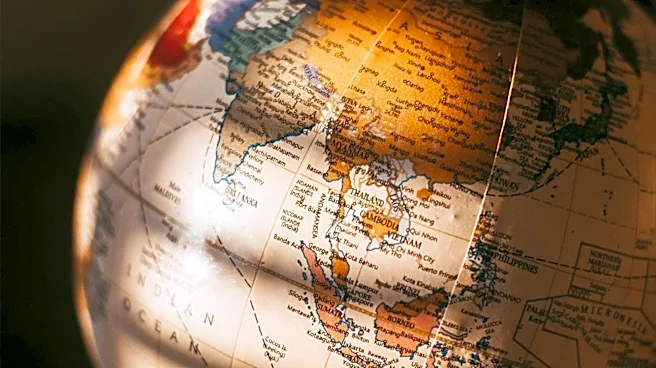
This rejection by the U.S. Department of State highlights the significant diplomatic and economic isolation facing the Taliban regime, nearly five years after its return to power. Afghanistan possesses vast untapped mineral reserves, estimated at over $1 trillion, including critical minerals like lithium, cobalt, and niobium, which are vital for global industries and clean-energy technologies. The Taliban has been actively seeking foreign investment, particularly from Chinese companies, to develop these resources as a cornerstone of its economic strategy. However, the U.S. decision signals that economic opportunities alone are insufficient to override concerns regarding the Taliban's governance, human rights record, and international standing. This stance reinforces the gap between the Taliban's economic outreach and the political realities that continue to shape international policy, impacting Afghanistan's ability to attract much-needed foreign capital and partnerships for economic growth.
What's Next?
The Taliban will likely continue its efforts to attract foreign investment from other nations, particularly those less aligned with U.S. foreign policy, such as China. However, the U.S. rejection could deter other Western nations and international companies from engaging in significant economic partnerships with the Taliban, further entrenching Afghanistan's economic isolation. The Taliban's leadership will face ongoing pressure to address international concerns regarding human rights, particularly the treatment of women and girls, and to establish a more inclusive political order if they hope to gain broader international recognition and investment. The U.S. is expected to maintain its current policy of non-engagement with the Taliban as a 'global terrorist group,' continuing to prioritize human rights and governance issues over potential economic benefits from Afghanistan's mineral wealth.
Beyond the Headlines
The U.S. decision underscores a broader ethical and strategic dilemma for the international community: how to balance humanitarian concerns and human rights with the potential economic benefits of engaging with a regime deemed repressive. The Taliban's control over Afghanistan's mineral wealth, if developed without international oversight, could further consolidate its power and fund its policies, which have been widely criticized for their human rights abuses. This situation also raises questions about the long-term stability and development of Afghanistan, as the lack of legitimate international investment could exacerbate economic pressures, poverty, and humanitarian crises. The 'resource curse' phenomenon, where abundant natural resources lead to corruption, inequality, and conflict rather than prosperity, remains a significant risk for Afghanistan under the current circumstances, especially with opaque mining contracts and concerns about revenue distribution.