




What's Happening?
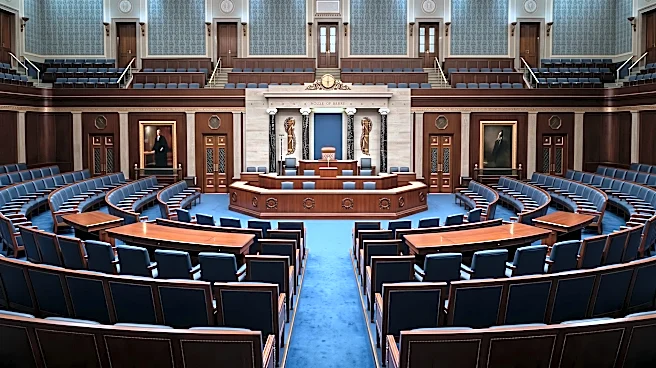
The U.S. House of Representatives has passed the Protect Economic and Academic Freedom Act (HR 4795), a bill that would strip federal student aid from colleges and universities found to be participating in commercial boycotts of Israel. The legislation,
which passed with a vote of 237-169, saw 33 House Democrats join the majority of Republicans in its support. Authored by Rep. Virginia Foxx (R-N.C.) and Rep. Josh Gottheimer (D-N.J.), the bill amends the Higher Education Act of 1965. It mandates that colleges certify they are not engaging in 'nonexpressive commercial boycotts' of Israel, defined as refusing to deal with or terminating business with the country or Israeli-regulated entities without a valid business reason. Institutions failing to provide this certification would lose eligibility for Title IV federal student aid, including Pell Grants and federal student loans. Additionally, a second section conditions Title VI international education and foreign language funding on an annual certification that students and faculty are not obstructed from participating in academic programs in Israel. The Department of Education would be responsible for publishing a list of non-compliant institutions. House Minority Leader Hakeem Jeffries (D-N.Y.) and 167 other Democrats voted against the bill, with Jeffries calling it 'poorly written' and a vehicle for political attacks.
Why It's Important?
This legislation carries significant implications for academic institutions across the U.S., potentially impacting their financial stability and academic freedom. The threat of losing federal student aid, including Pell Grants and federal student loans, could be a substantial deterrent for colleges considering or participating in boycotts against Israel. This could lead to a chilling effect on campus activism related to the Israeli-Palestinian conflict, as universities may prioritize federal funding over supporting certain student or faculty-led initiatives. The bill also raises questions about the balance between institutional autonomy and federal oversight, particularly concerning foreign policy matters. Proponents argue the bill combats anti-Semitism on campuses and prevents discrimination against Israeli entities, citing a rise in anti-Semitic incidents. Opponents, however, contend that the bill infringes upon free speech rights, with some arguing that boycotts are a protected form of expression. The debate highlights a broader national discussion about the role of universities in political discourse and the extent to which federal funding should be tied to compliance with specific foreign policy stances.
What's Next?
The Protect Economic and Academic Freedom Act (HR 4795) will now proceed to the Senate for consideration. Its passage in the Senate is not guaranteed, given the divided opinions and the strong opposition voiced by some Democratic leaders in the House. If it passes the Senate, it would then require presidential assent to become law. Should the bill be enacted, the Department of Education would be tasked with developing and implementing the certification process for colleges and universities, as well as publishing a list of non-compliant institutions. This could lead to legal challenges from universities or advocacy groups arguing that the law violates First Amendment rights or oversteps federal authority. The bill's impact on campus activism and the Boycott, Divestment, and Sanctions (BDS) movement will be closely watched, as institutions navigate the potential loss of federal funding against calls for academic freedom and political expression. The outcome in the Senate and any subsequent legal actions will determine the long-term effects of this legislation on U.S. higher education.
Beyond the Headlines
The passage of this bill delves into complex legal and ethical considerations surrounding free speech, academic freedom, and the role of government in regulating campus activities. The debate over 'nonexpressive commercial boycotts' versus protected expressive activity, as highlighted by opponents, points to a potential legal battleground. The Supreme Court's ruling in NAACP v. Claiborne Hardware, which protected politically motivated boycotts as expression, could be a key precedent in any future legal challenges. The bill's focus on Israel also underscores the ongoing tension between supporting a foreign ally and upholding civil liberties on U.S. soil. Furthermore, the legislation could inadvertently create a precedent for future attempts to tie federal funding to other foreign policy objectives or politically sensitive issues, potentially broadening the scope of federal intervention in higher education. This development reflects a growing trend of legislative efforts to address perceived anti-Semitism on campuses, often intersecting with broader discussions about free speech and the limits of protest in academic environments.