

What's Happening?
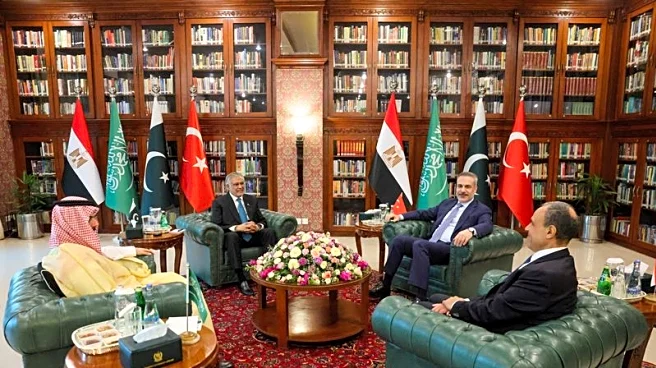
Diplomatic efforts are underway to address tensions between Iran and Saudi Arabia, with a focus on reopening the Strait of Hormuz, a critical waterway for global oil supply. Iran has demanded that any agreement include guarantees that its regional proxies,
such as Hezbollah and the Houthis, will not be targeted by the U.S. or Israel. Meanwhile, Saudi Arabia insists on 'ironclad guarantees' to restrict Iran's ballistic missile capabilities and end its support for regional militias. The talks, mediated by Pakistan, involve foreign ministers from Saudi Arabia, Turkey, Egypt, and Pakistan. The discussions are taking place under a deadline set by President Trump, who has threatened military action if Iran does not comply with reopening the strait.
Why It's Important?
The outcome of these negotiations could significantly impact regional stability and global oil markets. The Strait of Hormuz is a vital chokepoint for oil transportation, and its closure could disrupt global energy supplies. Iran's demands for immunity for its proxies highlight the complex geopolitical dynamics in the Middle East, where proxy conflicts have been a source of tension. Saudi Arabia's insistence on missile restrictions reflects concerns over Iran's growing military capabilities. The talks also underscore the role of Pakistan as a mediator, leveraging its relationships with both the U.S. and Iran. The potential for military escalation remains high if diplomatic efforts fail, which could have far-reaching consequences for international security and economic stability.
What's Next?
The deadline for negotiations is set to expire on April 6, and the outcome will depend on whether both sides can reach a compromise. If talks fail, there is a risk of military confrontation, particularly if the U.S. follows through on its threat to strike Iranian energy infrastructure. The international community may need to intervene to prevent escalation and ensure the security of global oil supplies. Future negotiations may involve broader regional cooperation, potentially including a consortium to manage oil traffic through the Strait of Hormuz. The situation remains fluid, with potential implications for U.S. foreign policy and regional alliances.