



What's Happening?
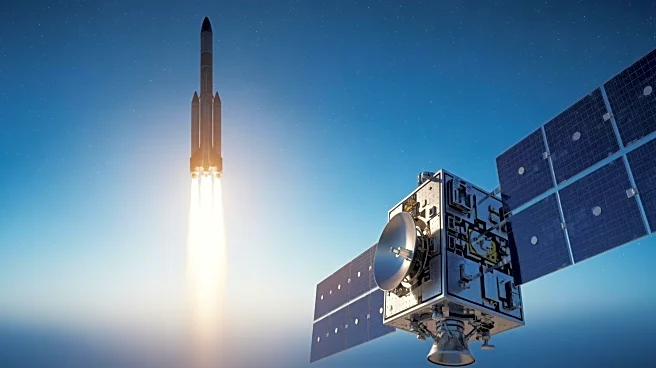
India's space agency, ISRO, successfully launched its heaviest satellite, the BlueBird Block-2, into low Earth orbit. The launch took place from the Satish Dhawan Space Centre and involved the LVM3-M6 rocket. This satellite, part of a collaboration with
U.S.-based AST SpaceMobile, aims to enhance global mobile connectivity by providing 4G and 5G services directly to smartphones without the need for ground stations. The satellite is a significant addition to AST SpaceMobile's constellation, which seeks to offer cellular broadband in remote areas. This launch marks the second major U.S.-India space collaboration this year, following the NASA-ISRO Synthetic Aperture Radar mission.
Why It's Important?
The successful launch of the BlueBird Block-2 satellite underscores the growing partnership between the U.S. and India in the space sector. It provides a commercial alternative to existing satellite networks, such as SpaceX's Starlink, and strengthens India's position in the global commercial launch market. This collaboration also reflects strategic geopolitical interests, as both nations seek to counterbalance China's expanding influence in space. The satellite's ability to provide direct mobile connectivity could revolutionize communication in remote areas, potentially impacting global telecommunications and internet access.
What's Next?
AST SpaceMobile plans to continue expanding its satellite network, with intentions to launch between 45 to 60 satellites by the end of 2026. This expansion aims to enhance global mobile connectivity further. Meanwhile, ISRO is preparing for future missions, including an unmanned lunar mission and its first human spaceflight, scheduled for 2027. These developments indicate a robust trajectory for India's space ambitions, potentially leading to more international collaborations and advancements in space technology.