






What's Happening?
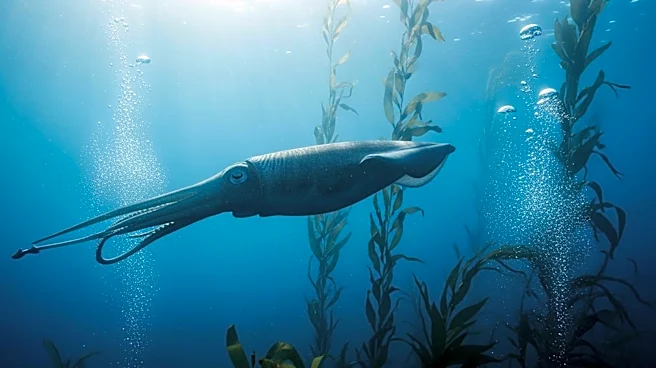
Scientists have discovered evidence of a giant squid in the waters off western Australia for the first time in over 25 years. This finding was part of a 2026 study published in the journal Environmental DNA, which analyzed samples collected during a deep-sea
research expedition near the Ningaloo coast. Researchers used environmental DNA (eDNA) to identify marine species living below the surface, collecting 178 water samples across five different depths in the eastern Indian Ocean. The study identified evidence of 226 species from 126 families, including genetic material linked to the elusive giant squid. In addition to the squid, researchers documented 83 new species records or range extensions for the region, including the sleeper shark and the faceless cusk eel, both identified in western Australian waters for the first time.
Why It's Important?
The discovery of the giant squid and other species in western Australia underscores the rich biodiversity of marine life in the region and the importance of conservation efforts. The use of eDNA technology in this study highlights a non-invasive method to monitor and understand marine ecosystems, which can be crucial for conservation strategies. The findings also contribute to the broader understanding of marine biodiversity and the potential impacts of environmental changes on these ecosystems. The documentation of new species and range extensions can inform future research and policy decisions aimed at protecting marine habitats and ensuring sustainable use of ocean resources.