




What's Happening?
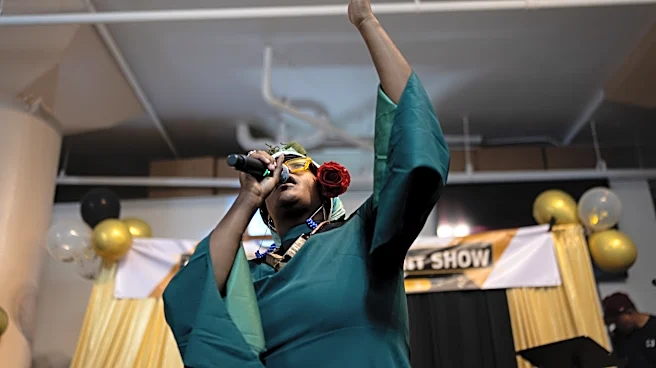
Ms Rachel, a prominent children's educator, has publicly advocated for the retirement of certain traditional nursery rhymes, labeling some as 'racist' and others as outdated. During an interview on SubwayTakes, she expressed a strong belief that it is 'time
for a new crop' of children's songs. She specifically cited 'Jimmy Crack Corn,' 'Oh! Susanna,' and 'Eeny, Meeny, Miny, Moe' as examples of racist rhymes that should be removed from circulation. Ms Rachel also suggested modifications to other classic songs, such as 'Three Little Kittens,' proposing that the mother in the rhyme should offer 'strategies' to help the kittens find their lost mittens instead of denying them pie. She also criticized 'Peter, Peter, Pumpkin Eater' for its depiction of a man confining his wife in a pumpkin shell. Her stance emphasizes the need for more inclusive and positive alternatives in children's entertainment.
Why It's Important?
This call to action by Ms Rachel is significant as it highlights a growing cultural conversation about the content children are exposed to from a young age. Nursery rhymes and children's songs are foundational elements of early childhood education and cultural transmission. By challenging the continued use of rhymes deemed racist or problematic, Ms Rachel is contributing to a broader movement to re-evaluate historical content through a contemporary lens of inclusivity and social justice. This initiative could influence content creators, educators, and parents to critically assess and potentially revise the material they share with children. The discussion also underscores the power of media personalities like Ms Rachel, who have a substantial platform, to shape public discourse and influence educational practices, potentially leading to a shift in the types of children's media produced and consumed in the U.S.
What's Next?
Following Ms Rachel's public statements, it is likely that there will be increased discussion among parents, educators, and children's content creators regarding the appropriateness of traditional nursery rhymes. This could lead to a more widespread adoption of her suggestions, with a focus on creating or promoting new, inclusive children's songs. Educational institutions and media companies specializing in children's content may review their existing libraries and production guidelines to align with these evolving standards of inclusivity. There might also be a push for workshops or resources for parents and teachers on how to identify and replace problematic content with more positive alternatives. The conversation could also extend to other forms of children's media, prompting a broader re-evaluation of historical narratives and representations.
Beyond the Headlines
Beyond the immediate impact on children's music, Ms Rachel's advocacy touches upon deeper societal implications concerning cultural heritage, historical revisionism, and the role of education in shaping future generations. The debate over retiring traditional rhymes raises questions about how societies reconcile problematic elements of their past with contemporary values. It highlights the ethical responsibility of content creators to ensure that children's media promotes positive values and avoids perpetuating harmful stereotypes. This movement could also foster greater creativity in the children's entertainment industry, encouraging the development of diverse and culturally sensitive content that reflects the modern world. Ultimately, it contributes to a larger cultural shift towards greater awareness and intentionality in the messages conveyed to young audiences.